Book Categories:

In the packaging of powder-based beauty and skincare products, functionality is often the primary consideration. The powder spray bottle, in particular, has emerged as a noteworthy new solution in recent years—moving away from the traditional powder compact or perforated container, and adopting a pump or squeeze-operated powder dispensing mechanism. This allows for more precise and controlled application, while offering a cleaner, more effortless user experience.
As the market demand for powder product packaging continues to diversify, the range of powder spray bottle types and functionalities has also expanded. Today, we will take a look at the mainstream powder spray packaging options currently available—helping you understand what is out there and how to make more informed decisions during the sourcing process.
1. Powder Spray Bottles with Dispensing Pumps

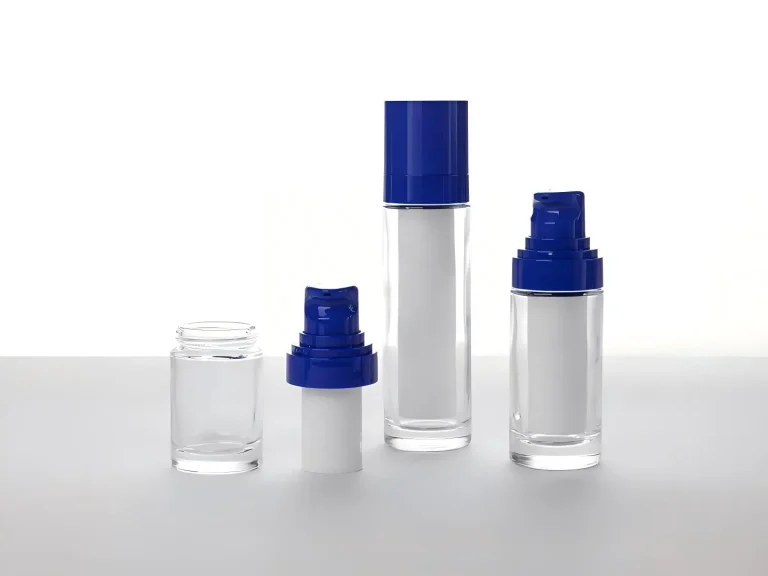
One of the most common powder spray solutions currently available on the market is the powder spray bottle with a pump mechanism, as shown in the image above. Unlike traditional perforated lids, this design employs a trigger mechanism similar to spray pumps, dispensing powder in an even, controlled manner with each press. It avoids issues of under-dispensing or over-dispensing, while also effectively preventing powder leakage when the bottle is tilted or laid flat.
For products such as baby powder, prickly heat powder, or setting powders, this powder spray bottle is a highly suitable packaging choice. However, it is important to note that there is a clear difference in application area and dosage requirements between baby powder and setting powder—the former typically requires broad dusting over larger areas, while the latter calls for light, targeted application. Therefore, during procurement, it is essential to pay attention to variations in pump nozzle design and powder output volumn—confirming whether the dispensing range and volume per press align with your product’s intended usage scenario to avoid compromising the consumer experience.
In addition, powder spray bottles with an extended nozzle design have a small detail worth noting: after dispensing, a small amount of powder may remain inside the long nozzle. If the bottle is laid flat or stored with the nozzle pointing downward, residual powder may slide out and settle on the bottle surface. For this reason, this design is better suited for stationary use, such as being placed on a vanity. If your product is intended for travel or frequent storage, we would recommend considering powder pump bottles without an extended nozzle—as these are generally more hygienic and convenient for secondary use, and better align with on-the-go usage habits.
2. Squzzable Powder Spray Bottle

The pump mechanism of a powder spray bottle is relatively intricate, which means it can be more challenging to clean and maintain. If the bottle is intended for refillable use, incomplete cleaning may cause residual powder inside the pump to clump when exposed to moisture—potentially clogging the nozzle and affecting dispensing performance. As a result, this design is generally better suited for single-use applications where the same powder is used and frequent cleaning is not required—such as setting powders or touch-up products.
To address this limitation, an alternative solution has emerged in the market: the squeeze-type powder spray bottle. Its powder dispensing head features a simpler construction, making disassembly and cleaning more straightforward, with a lower risk of residue buildup. This makes it a more suitable option for refillable use or scenarios where the powder content needs to be changed frequently.
Squeeze-type powder spray bottles are typically made from softer materials such as PE or silicone, and are equipped with fine-mist nozzles or multi-hole rotating caps. Dispensing is as simple as squeezing the bottle body, which releases powder with ease. Compared to pump-type designs, squeeze bottles generally deliver a larger volume per use and are more intuitive to operate—making them particularly well-suited for products such as dry shampoo, body powder, or post-bath dusting powders that require broad application. Moreover, due to their simpler structure, squeeze-type powder spray bottles are also more cost-effective to produce, offering a clear price advantage for bulk procurement.
3. Air-bulb Powder Spray Bottles

Compared to squeeze-type powder spray bottles, air-bulb powder spray bottles offer finer, more controllable powder dispensing, making them suitable for applications where dosage accuracy is a high priority. However, this type of bottle generally requires powder with finer particle size—if the powder is too coarse or has poor flowability, it may accumulate or clump inside the air-bulb chamber, affecting the smoothness and uniformity of dispensing.
Air-bulb powder spray bottles are available in two main container materials: plastic and glass. Glass offers a more premium feel and superior chemical stability, making it suitable for highly active or moisture-sensitive powder formulations. Plastic, on the other hand, is lightweight and shatterproof, making it more practical for travel or on-the-go use. That said, the actual powder dispensing performance is mainly determined by the design of the air-bulb mechanism—including the bulb’s compression ratio, the orifice size of the air channel, and the coordination between the powder chamber and the airflow path.
The principle behind air-bulb dispensing is similar to that of squeeze-type bottles—both rely on external pressure to generate airflow that carries the powder out. However, there is a key difference: squeeze-type powder bottles rely on mechanical piston action to push the powder out, with a relatively direct airflow path. Air-bulb bottles, in contrast, generate a high-velocity airflow by squeezing the bulb, which “blows” the powder out in a more dispersed, fine mist. This makes the output easier to control by varying the squeezing force.
Currently, air-bulb powder spray bottles on the market tend to favor retro or decorative design aesthetics, and are commonly used for products such as body shimmer powders, scalp concealer powders, and highlighters—categories that emphasize ritual and visual appeal. This type of packaging not only meets the functional requirement of fine powder application but also becomes part of the product’s overall aesthetic, making it particularly suitable for mid-to-high-end brands or those that emphasize a “premium experience.”
4. Maintenance and Usage Tips for Powder Spray Bottles
Due to the relatively intricate pump or air-bulb mechanisms of powder spray bottles, combined with the naturally hygroscopic and clumping-prone nature of powders, their cleaning and maintenance require extra attention compared to ordinary packaging.
The following guidelines are structured around three key principles—moisture prevention, clog prevention, and residue prevention—for the reference of both procurement professionals and end users.
4.1 Prime Before First Use
For newly opened powder spray bottles or those that have not been used for an extended period, it is recommended to prime the mechanism several times without powder—simply by pressing or squeezing to allow air to circulate through the internal channels, expelling any residual dust or moisture that may have accumulated in the nozzle. This helps ensure smooth, even powder dispensing during actual use.
4.2 Keep Away from Water and Humid Environments
Powder’s worst enemy is not heat, but moisture. Powder spray bottles should be kept away from areas with high humidity, such as bathrooms or sink-side countertops. Once powder absorbs moisture, it tends to clump and block the nozzle, and may also compromise the powder’s adhesion and overall performance.
4.3 Prioritize Dry Cleaning
For refillable powder spray bottles that require cleaning, dry cleaning methods are recommended as the first option: gently wipe the exterior of the nozzle with a soft, dry cloth or cotton swab. If the structure is detachable, the nozzle can be removed and the internal channels blown clean with a compressed air bulb. Special care should be taken to avoid rinsing the pump or air-bulb mechanism directly with water—residual moisture is difficult to remove and may actually worsen clogging. If water washing is absolutely necessary, ensure thorough drying of the internal channels before reuse.
4.4 Store Upright
Whether pump-type or squeeze-type, powder spray bottles should be stored in an upright position. This not only helps prevent accidental powder leakage when not in use, but also reduces powder accumulation around the opening or internal channels, effectively extending the period of smooth operation.
4.5 Observe Quantity and Quality When Refilling
For refillable powder spray bottles, avoid overfilling. It is recommended to fill the bottle to approximately two-thirds of its capacity, leaving sufficient air space to allow the airflow to carry the powder out effectively. In addition, when switching to a powder with a different particle size or formulation, it is advisable to conduct a small test spray first to confirm compatibility with the bottle structure.
4.6 Replace Pump or Air-bulb Components Periodically
The pump and air-bulb mechanisms are consumable components. Over time, they may experience reduced elasticity or degraded sealing performance, affecting dispensing accuracy and hygiene. For high-frequency use or mass-produced products, it is advisable to confirm the service life and replacement cycle of these parts with the supplier during the procurement stage, so that spare components are available when needed.
5. Where to Buy Spray Bottle

The above covers the main types and characteristics of dry powder spray bottles currently available on the market. As can be seen, different structural designs each offer distinct advantages in terms of powder dispensing accuracy, applicable scenarios, and maintenance requirements. Choosing the right bottle that aligns with your product positioning not only enhances user experience but also helps reduce after-sales complaints and maintenance costs to a certain extent.
As a manufacturer with over a decade of experience in the packaging industry, we have accumulated substantial expertise in the structural matching and selection of powder spray bottles. One of our flagship models is available in 30ml and 50ml capacities, featuring a bottom-spring piston mechanism paired with a powder-scooping nozzle that effectively promotes even powder dispersion and helps prevent clogging or uneven output. It also comes with a protective outer cover to shield the pump from dust contamination when not in use—making it particularly suitable for products with high hygiene and sealing requirements.
If you are looking for a suitable packaging solution for your powder-based products, please feel free to reach out to us. We will recommend practical and well-suited powder spray bottle options based on your product format, usage scenario, and budget.