Book Categories:

1. The Unmissable Central Axis

Whether the opening position of the bottle lid aligns with the logo or printed content on the front of the bottle body is an extremely easy-to-overlook detail. When most consumers receive a product, their attention is usually focused on the product introduction itself, and they hardly notice whether the sealing line of the tightened cap aligns with the central axis of the bottle body.
However, once the brand needs to do product photography, or when consumers repeatedly open and close the cap in daily use, this “misalignment” detail will gradually become apparent. For cylindrical bottle bodies, cap misalignment mainly affects visual aesthetics and does not significantly impact actual use. But for flat bottles, square bottles, or uniquely shaped bottles, the offset of the cap’s opening/closing position can directly affect grip comfort and the smoothness of opening, even making operation feel awkward.
Therefore, this asymmetry is not purely an aesthetic issue. If a brand is committed to delivering an ultimate product experience, this detail cannot be ignored — it concerns not just visual consistency and neatness, but more importantly, the brand’s level of care and attention to user experience.
2. Why Does This Misalignment Happen?
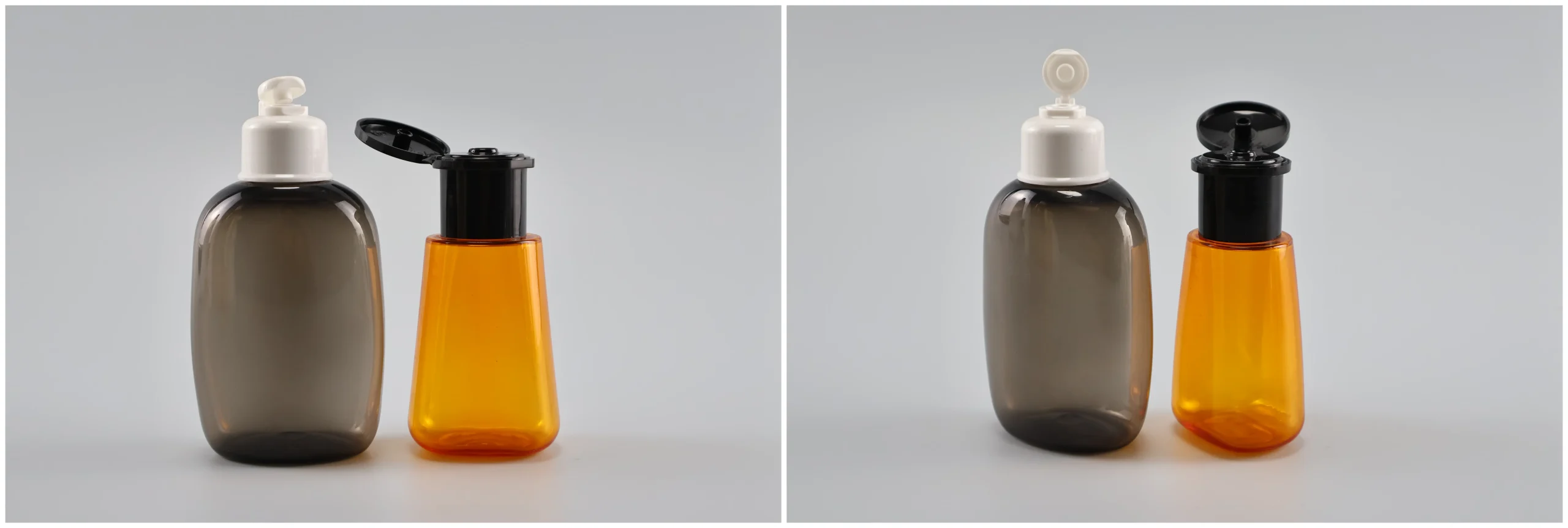
The production techniques for plastic caps and bottles are now quite mature, yet the visual asymmetry between the bottle lid’s opening/closing position and the printed content on the bottle body remains a problem that is difficult to completely eliminate.
At its root, this is not due to a lack of technical capability, but rather a result of the structure of the general-purpose supply market. In reality, very few cap suppliers are also involved in the production of preforms or bottle bodies, and the manufacturing of plastic bottles is highly dependent on preforms as a type of semi-finished component. During the initial design phase, preform suppliers prioritize universal compatibility of accessories across common bottle shapes and cap types, rather than customizing or optimizing for the specific opening/closing position of any particular cap or bottle design.
Therefore, this visual asymmetry does not stem from deformation of the cap itself, nor is it a technical error by the preform manufacturer. Rather, it is an inevitable outcome of different supply chain segments independently adapting to general market demands, each operating in its own silo.
3. How to Make Your Bottle Lid Aligns with the Logo
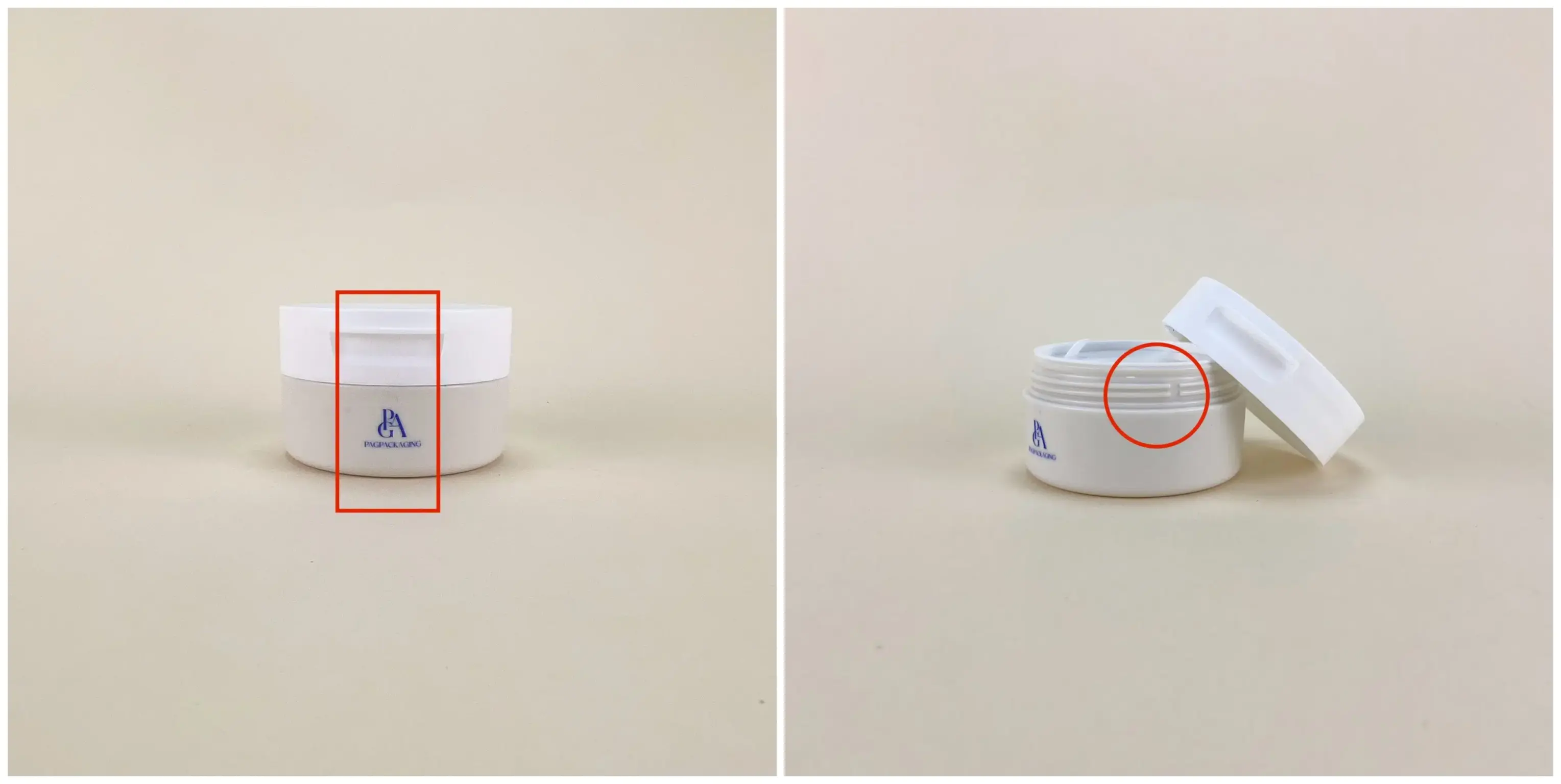
Although visual asymmetry may not be easily noticed in the short term, over time it can have a subtle but negative impact on the consumer’s user experience. That said, this issue is not insurmountable.
If you want the cap or pump to consistently stop at a preset orientation every time it is tightened, the key lies in modifying the thread structures of both the preform and the closure. By adding a positioning notch on the threads, you can achieve precise directional control of the tightening end position.
For materials such as PE that do not require preforms, the same effect can be achieved by making localized modifications to the thread mold of the bottle itself.
It should be noted that whether it involves modifying preforms, pump heads, caps, or adjusting bottle mold threads, mold modification fees will apply. Costs vary by process — extrusion blow‑molding modifications (PE bottles) are generally more affordable, while injection‑molded parts (PP caps, pump heads, PP bottles, PET preforms) tend to be more expensive, as injection mold modification fees are typically calculated per cavity, and the more cavities there are, the higher the cost.
This shows that while visual symmetry design is a subtle detail, the process and cost considerations behind it are by no means trivial. Therefore, if you are considering snap-on caps or flip-top caps for your packaging and want to keep costs under control in terms of symmetry, it is important to make careful assessments at the bottle selection stage — to avoid, as much as possible, structural limitations that could compromise the user experience.

As a supplier with deep expertise in both packaging production and preform manufacturing, we have already incorporated positioning structures into some of our preform designs. Feel free to discuss your specific packaging needs with us — it’s quite possible that, without any additional mold modification fees, we can leverage our existing mold resources to offer you a packaging solution that balances visual consistency and cost-effectiveness.