Book Categories:

1. How to Classify Preform Types?
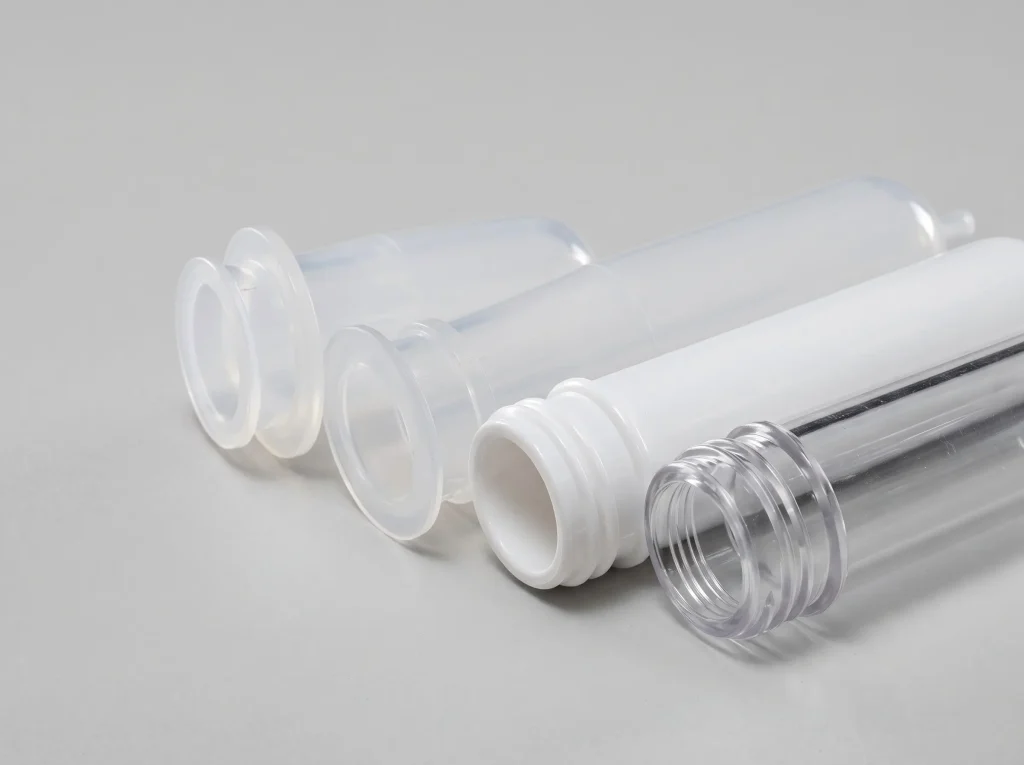
As we all know, most plastic bottles are formed by blowing preforms. However, when it comes to the preform types, procurement professionals often find themselves facing a puzzling question: looking across the market, plastic bottles come in all shapes and sizes, yet their neck finishes all seem to look alike—they are all round, threaded, and similar in outer diameter. But the same bottle cap does not necessarily fit every neck finish.
If classified by neck finish size alone, preforms can come in hundreds of specifications. To make matters more complicated, even with the same neck finish size, if the thread design differs, the caps may still not be interchangeable. Therefore, when matching a preform to a bottle, neck finish size is only the basic starting point—thread type and gram weight are equally indispensable.
That said, gram weight alone is not suitable as a classification dimension. On one hand, it indirectly determines the capacity range of the blown bottle, but this relationship is not linear. On the other hand, there is no unified standard among suppliers when it comes to preform gram weight development—deviations of 0.5–2g within the same specification are common, making it impractical to use as a basis for classification.
In comparison, combining neck finish size with thread design is a more reliable classification path. The range of thread designs for preforms is relatively limited—only about eight types are commonly found in the market. Different thread types not only correspond to specific cap-fitting methods but also define the end-use applications for which the preform is suited. One could say that the thread serves as one of the few universally consistent anchor points in the preform specification system, and a prerequisite for healthy commodity trading in the market.
Therefore, this article starts with preform thread classification to map out the current mainstream preform specification framework, providing a clear reference for selection.
2. 8 Popular PET Preform Types
As previously mentioned in the article “10 Truths About Preforms,” the thread designs of plastic bottle preforms—particularly PET—are clearly differentiated by application field. From an end-use perspective, PET preforms mainly serve four major sectors: water and beverages, pharmaceuticals, food packaging, and personal care products. Among these, the pharmaceutical, food, and personal care sectors each have one to two dominant thread types, while the water and beverage sector is more complex, with four to five different thread designs in use.
This article starts with the eight most common preform types of threads, walking through their structural characteristics and corresponding market applications one by one.
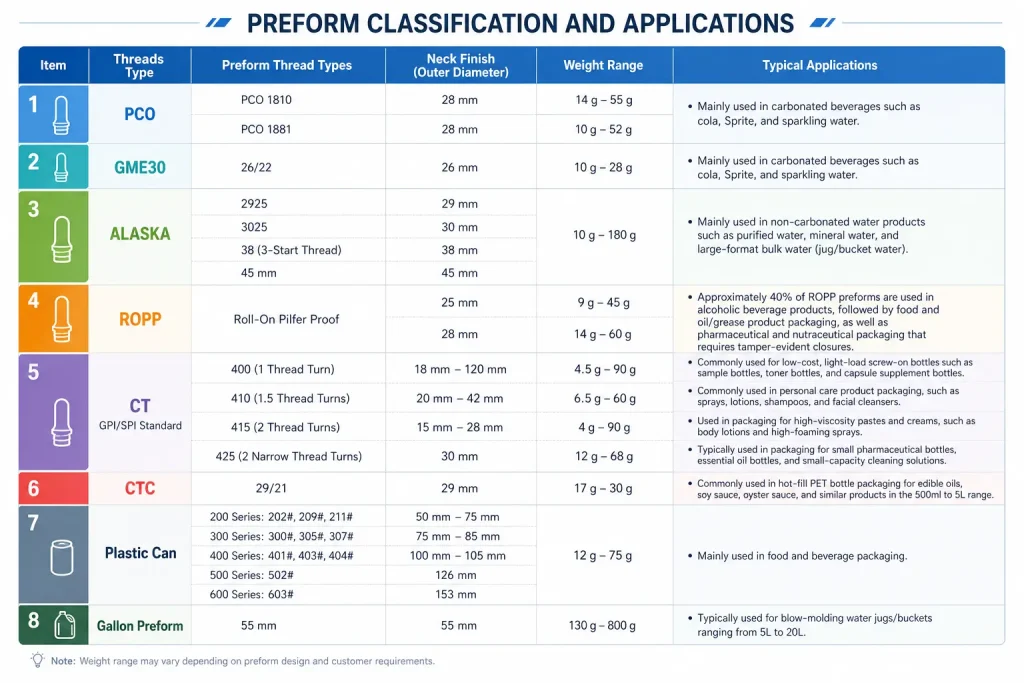
The table above summarizes the eight conventional preform types currently available on the market. As can be seen from the table, each thread specification corresponds to multiple neck finish sizes, and preforms with the same neck finish size may also feature different thread designs.
Therefore, during procurement communication—to ensure accurate quotations and avoid information mismatches—when providing preform packaging solutions, we typically conduct a secondary confirmation with the client by cross-referencing multiple sources of information, including product drawings, photos of the actual neck finish, and videos, to assess preform compatibility.
It should be noted that the application areas listed in the table are a generalization of current market practices, not absolute industry standards. The actual end-use scenario for a preform ultimately depends on the buyer’s product positioning and packaging strategy. Take PCO thread as an example: while most PCO preforms are used in carbonated beverage packaging, some companies also pair them with pumps for cleaning product packaging.
3. PCO Preforms

PCO (Plastic Closure Orientation) is the dedicated neck finish standard for carbonated beverage bottles, issued by the International Society of Beverage Technologists (ISBT). Under this standard, the preform outer diameter is uniformly 28mm, but it can be further divided into two specific specifications: PCO 1810 and PCO 1881.
PCO 1881 is an iterative upgrade of PCO 1810, with the two differing primarily in structural parameters such as neck height, thread pitch, and travel distance. Through structural optimization, PCO 1881 reduces the neck weight from 5.06g to 3.81g—a reduction of 1.25g, or 24.7%. This lightweighting improvement directly lowers the procurement and transportation costs of both preforms and finished bottles, while also reducing material consumption to a certain extent and enhancing the environmental benefits of the production process.
However, PCO 1810 has not been completely phased out of the market by the introduction of PCO 1881. This is mainly because some filling lines are still calibrated to the 1810 standard; switching to 1881 would require equipment parameter adjustments or component replacements, which presents a certain conversion cost for some manufacturers. As a result, the two specifications have long coexisted in the market.
For a detailed comparison of PCO 1810 and PCO 1881 in terms of structural details, filling compatibility, and selection recommendations, please refer to the featured article on our site: “PCO 1810 vs. PCO 1881,” which includes an in-depth comparative analysis.
4. GME 30 Preforms
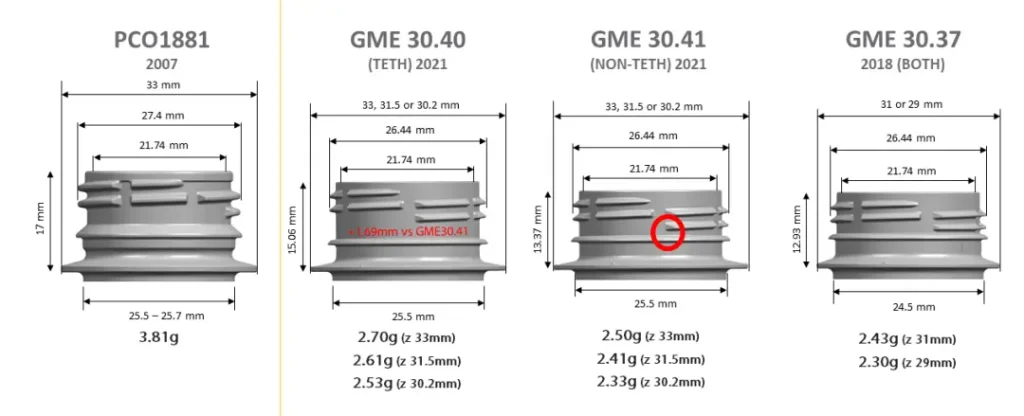
GME is a next-generation lightweight neck finish standard that complies with the EU Tethered Cap regulations. It has become the mainstream PCO-alternative neck finish system promoted by major international brands such as Coca-Cola, Pepsi, and Danone. The GME30 series serves as its core family, with an outer diameter of 26mm and an inner diameter of 21.74mm—hence the industry shorthand of referring to GME preforms as “26/22 preforms.” The GME30 series can be further subdivided into multiple variants, including GME30.40, GME30.14, GME30.28, and GME30.23.
As can be seen from the 3D thread comparison diagram above, the differences among the GME series variants primarily lie in two structural parameters: thread pitch and neck height. However, these structural adjustments do not have a substantial impact on the functional performance of carbonated beverage filling, and their performance is comparable to that of existing mainstream standards.
It is important to note that GME30.40 and GME30.41 have clearly distinct functional roles: GME30.40 is a neck finish specifically designed for tethered caps, featuring a larger gap between the thread end and the tamper-evident band to accommodate the tethered cap assembly; GME30.41, on the other hand, is positioned as a high‑performance neck finish for non‑tethered applications. The two differ in structural design and are not interchangeable.
5. ALASKA Preform
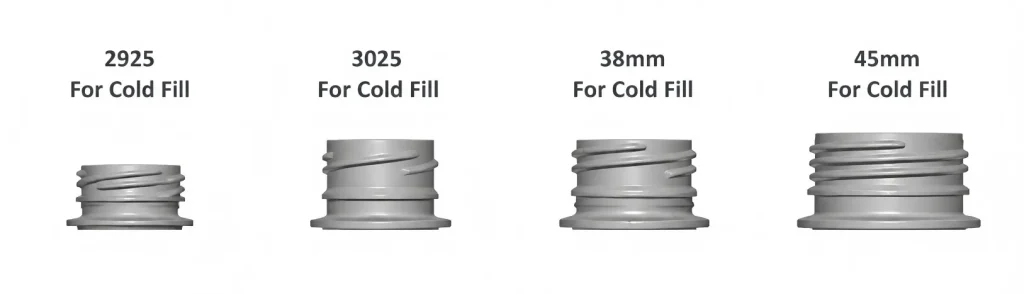
Alaska, along with PCO and GME, is a common preform type in the water packaging sector, but it is primarily used for non-carbonated beverage packaging. The name originates from a product code used by a North American mold manufacturer in the early days. The defining feature of Alaska preforms is their thread design, which typically uses a 3-start thread structure, with each thread wrapping at least half a turn around the neck finish.
In terms of neck diameter specifications, Alaska preforms are mainly available in four sizes: 2925, 3025, 38mm, and 45mm. Among these, 2925 and 3025 both have an inner diameter of 25mm, with an outer diameter difference of only 1mm—making them extremely close in size. Both are used for water packaging, but with distinct positioning: the 2925 features a lower neck height and lower gram weight, targeting the value-oriented water market. This logic mirrors the iterative evolution of PCO preforms—reducing neck gram weight to lower packaging costs.
Generally speaking, the larger the neck diameter, the higher the maximum gram weight the preform can accommodate—while not an absolute rule, it is a widely observed industry pattern. Taking Alaska as an example: in the 38mm specification, our current maximum gram weight is 88g, while for the 45mm specification, we can reach up to 180g. The greater the gram weight, the thicker and longer the preform wall becomes, and the larger the bottle capacity it can blow-form. Larger capacity bottles require larger neck diameters—which is precisely the practical reason why Alaska preforms come in multiple diameter specifications.
Water, as a low-value fast-moving consumer good, has always had its packaging design driven by cost optimization—fine-tuning preform specifications while ensuring basic bottle performance and quality is itself a highly challenging engineering task.
The gradual expansion of Alaska preform neck diameters—from 2925 up to 45mm—reflects an ongoing process in the beverage packaging market: the continuous segmentation of application scenarios and the optimization of cost structures. When sourcing Alaska preforms, the most rigorous approach is not to compare unit prices among suppliers, but rather to first analyze the cost logic behind each neck diameter specification—and only then select the appropriate neck size and gram weight. How much material can be saved by reducing the neck diameter by just 1mm? Does the mold design need to be adjusted? Will the existing filling line require additional modifications? All of these variables ultimately feed into the total cost of ownership.
6. ROPP Preform
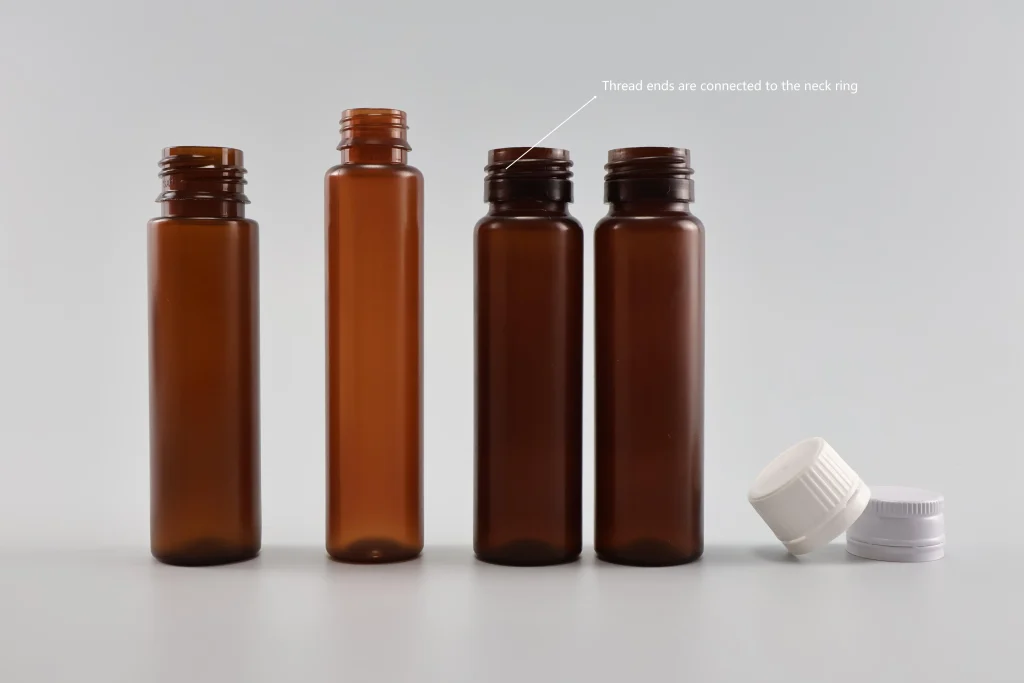
ROPP threads are commonly found on glass bottle packaging, particularly in neck designs that pair with aluminum tamper-evident caps. In the field of plastic preforms, ROPP threads are relatively less common and are seen more often on PP or glass materials rather than on PET preforms.
The image above shows a side-by-side comparison of several oral liquid bottles, all of which feature ROPP necks. The two on the right are specifically designed for aluminum tamper-evident caps, and their thread design differs significantly from ROPP threads that are paired with plastic tamper-evident caps on the left—they are not interchangeable. For ROPP preforms designed to be paired with aluminum tamper-evident caps, the thread ends are connected to the neck ring.
PET ROPP preforms are typically used with plastic tamper-evident caps. Currently, we offer PET ROPP preforms in a single specification: 28mm neck size with a 16 g weight, primarily used in packaging for cough syrups, pharmaceuticals, and nutraceuticals.
7. CT Preforms

CT (Continuous Thread) refers to a thread design that runs continuously around the outer wall of the neck finish, as opposed to thread structures found on preforms such as PCO or Alaska—where the thread travel is shorter and typically does not complete a full circle around the neck.
The classification of CT preforms is primarily based on the number of thread turns, which directly affects the neck structure and, in turn, determines the type of cap or pump that can be fitted to the bottle. The more thread turns there are, the more extensive the thread engagement, and the wider the range of compatible closure types. This is the fundamental reason why personal care preforms offer far greater packaging flexibility and design versatility compared to the previously discussed categories.
It should be noted that the specification system for CT preforms follows the GPI (Glass Packaging Institute) standard. In practical applications, the 400, 410, and 415 neck finishes are the most common, typically used for plastic preforms, while the 425 and 430 series are more frequently found in glass bottle designs.
8. CTC Preforms
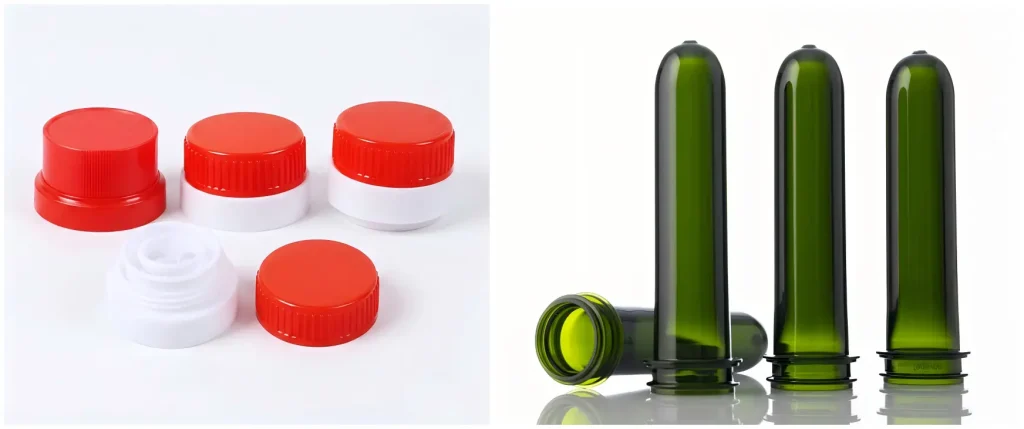
CTC (Continuous Thread Cooking Oil) is the most mainstream neck thread standard in the edible oil packaging sector. Its structure features a single-start continuous thread with a relatively thick thread profile, offering better compression resistance and anti-leakage performance. This type of preform is primarily used in hot-fill PET bottle packaging for edible oils, soy sauce, oyster sauce, and similar products in capacities ranging from 500ml to 5L.
CTC preforms are also paired with tamper-evident caps, but their fastening method employs a clip-on structure—once sealed, the tamper-evident band cannot be easily broken off by the user. This design allows the cap to fit tightly against the neck finish, providing better airtightness and leakage protection for liquid food packaging.
9. Plastic Can Preforms
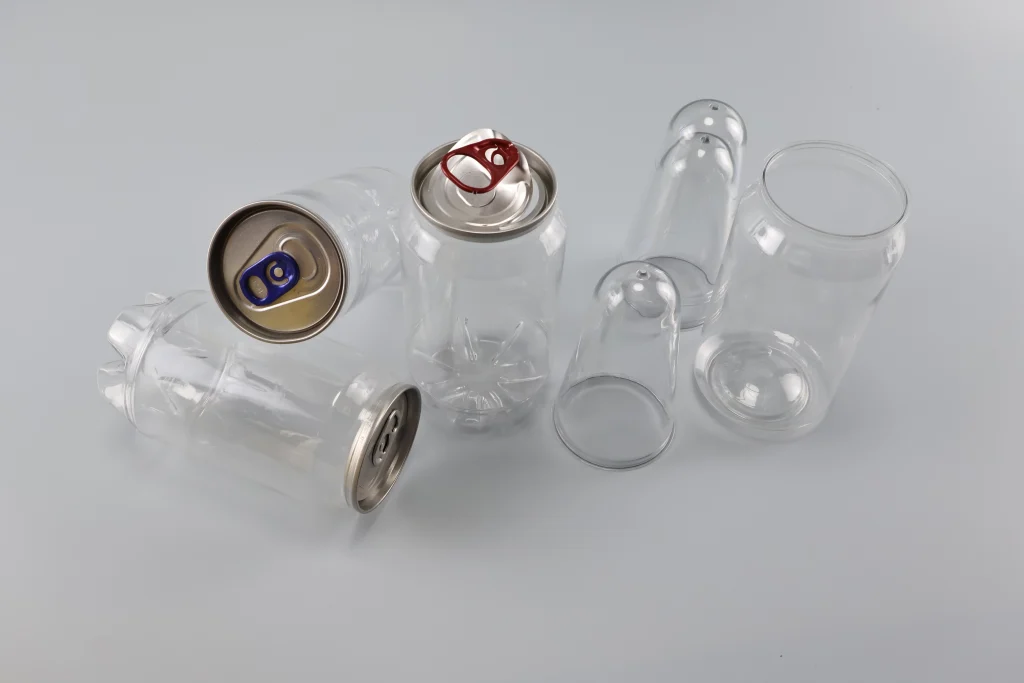
Plastic can preforms are primarily used in food and beverage packaging. Their neck structure differs significantly from conventional threaded preforms—the top of the neck features an outward curled lip designed for snap‑fit engagement with easy‑open ends.
Due to the rather unique neck structure of Plastic Can preforms, there is currently no standardized measurement method for neck finish dimensions within the industry, so they are rarely classified directly by neck finish size.
The prevailing classification method is based on the compatible aluminum easy‑open lid sizes, with common types including 202#, 300#, 603#, etc. In addition to the specifications listed in the table above, this series also includes other types such as 200#, 315#, and 701#—however, these are primarily used for aluminum easy‑open cans and tinplate cans, and are not within the compatible range for PET plastic easy‑open cans.
It is worth noting that if plastic can preforms are used for carbonated beverage packaging, the bottle base must be designed with a petaloid base structure. This design disperses the pressure points across multiple petal-shaped support legs, effectively withstanding the internal pressure generated by carbonation, preventing the base from bulging outward, while also ensuring that the bottle can stand upright stably after filling.
10. Gallon Preform
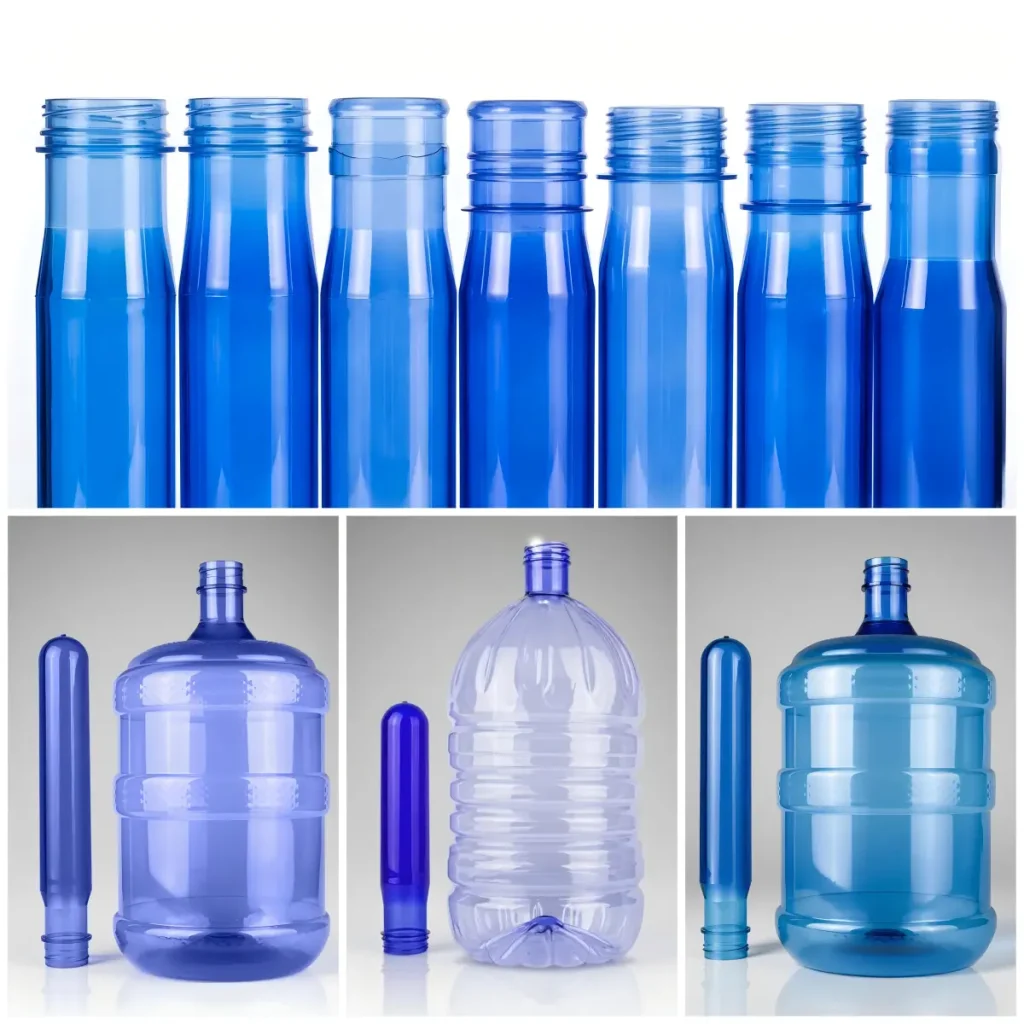
Although the neck diameter of gallon preforms is uniformly 55mm, their thread structures come in multiple subtypes—long thread, short thread, tall neck thread, fine thread, etc.—with different designs corresponding to different cap fitting methods and filling requirements. For this reason, gallon preforms, like Alaska and PCO, form a category of their own with a distinct system.
When sourcing such preforms, it is essential to request product drawings from the supplier, or proactively provide photos and videos of the actual neck finish for verification—only then can you obtain an accurate quotation and a proper packaging solution.
In terms of gram weight, gallon preforms are significantly heavier than standard preforms, typically ranging from 130g to 800g, and are primarily used for blow‑molding 5L to 20L water jugs.
Professional Preform Solutions

The eight preform types outlined above represent the most common specification systems currently available on the market. However, it should be noted that this is far from the full picture—as end brands increasingly demand differentiated packaging, more and more suppliers are developing customized neck solutions for specific products.
Due to the high mold development costs and technical barriers involved, once such specialty-thread preforms reach stable mass production, they become an effective means for brand owners to build product distinctiveness and anti-counterfeiting barriers. In today’s increasingly homogenized consumer packaging landscape, a custom neck design offers not just functional compatibility, but also a competitive edge at the brand level.
Over the past decade and more, we have been dedicated to building technical expertise and production capabilities in the field of preform injection molding. While we may not carry stock for every specialty-thread preform, we possess end-to-end capabilities—from mold development to injection molding mass production—and can provide tailored preform customization solutions based on each client’s packaging requirements and brand positioning. Whether you need assistance in selecting from existing specifications or in co-developing a brand-new neck design, we welcome procurement professionals to reach out and discuss the optimal packaging path for your products.