Book Categories:

Early PET bottle forming did not actually go through the preforms stage. Raw material pellets were directly heated, extruded into parisons, blown, and cooled—all in one step—and the bottle was finished. It sounded more straightforward than today’s process, but this “single-stage blow molding” had clear shortcomings on both the production and end-product fronts—problems like sluggish throughput, subpar transparency, and uneven wall thickness are common.
In other words, the single-stage blow molding is not without its merits—it does have its own production advantages. However, the advent of the preform happened to compensate for some of the shortcomings of the single-stage blow molding.
In this article, we’ll explore why most of the packaging industry and manufacturers have abandoned this shortcut for plastic bottle production and instead chosen the seemingly longer path of “making preforms first, then blowing bottles.”
1. Greater Production Flexibility
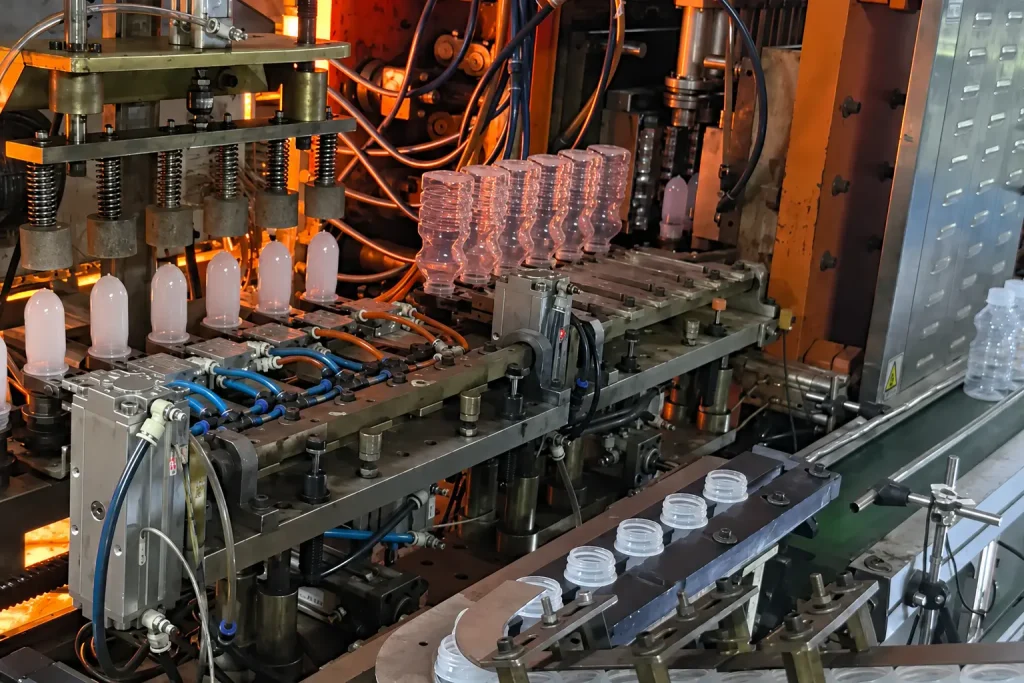
In single-stage blow molding, bottle production typically requires just one single machine. After the PET resin is dehumidified and dried, the entire process—injection molding of preforms and blow molding of bottles—is completed on the same piece of equipment, with no need to wait for the preforms to cool or to go through a storage stage.
The two-stage blow molding, by contrast, requires two separate machines: an injection molding machine and a blow molding machine. The injection molder first heats the PET resin and injects it into preforms. Once the preforms have cooled to room temperature, they are collected and stored. When bottles are needed, the preforms are fed into the blow molding machine, where they are reheated to the proper softening temperature in an infrared oven, and then stretch-blown in the mold.
At first glance, the single-stage blow molding appears far simpler than the two-stage blow molding. However, its production rhythm lacks flexibility—heating, extrusion, blowing, and cooling are all linked in series along the same production line, with each step tightly coupled to the next and no buffer in between.
The two-stage blow molding, on the other hand, benefits from the fact that preforms are solid semi-finished products that can be freely scheduled across both time and space: preforms injection-molded today can be blown into bottles tomorrow, and the same batch of preforms can also be used to blow different bottles, as long as the preforms’ key parameters meet the design requirements for the bottles. This staged model—”make preforms first, blow bottles later”—frees production from being tied to a single, rigid pace, making it far more flexible and controllable.
2. Lower Equipment Investment
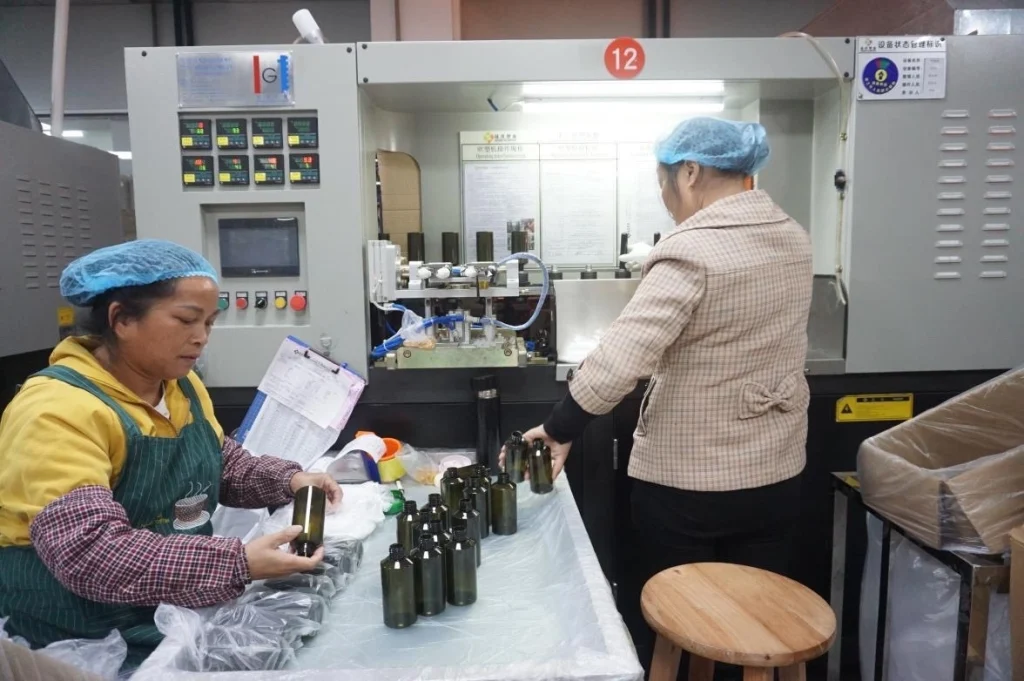
Although the single-stage blow molding involves a shorter process and fewer machines, the purchase price of a single-stage blow molding machine is often higher than the cost of the injection molding and blow molding machine. Moreover, its mold structure is more complex, and the development cost is typically several times that of molds used in injection and blow molding machines.
In contrast, the two-stage blow molding features independent injection molding and blow molding machines, offering a lower initial investment threshold and more economical mold manufacturing costs. It also allows for greater flexibility in product changeovers, making it particularly suitable for small and medium-sized enterprises with limited capital or those that need to adjust their product lines frequently.
On the operational and maintenance side, the two-step method separates injection molding and blow molding into two independent stages. Each stage involves relatively specialized operations, with clearly defined personnel responsibilities. The reduced structural complexity of each individual machine makes routine maintenance and troubleshooting more straightforward as well.
3. Greater Production Capacity
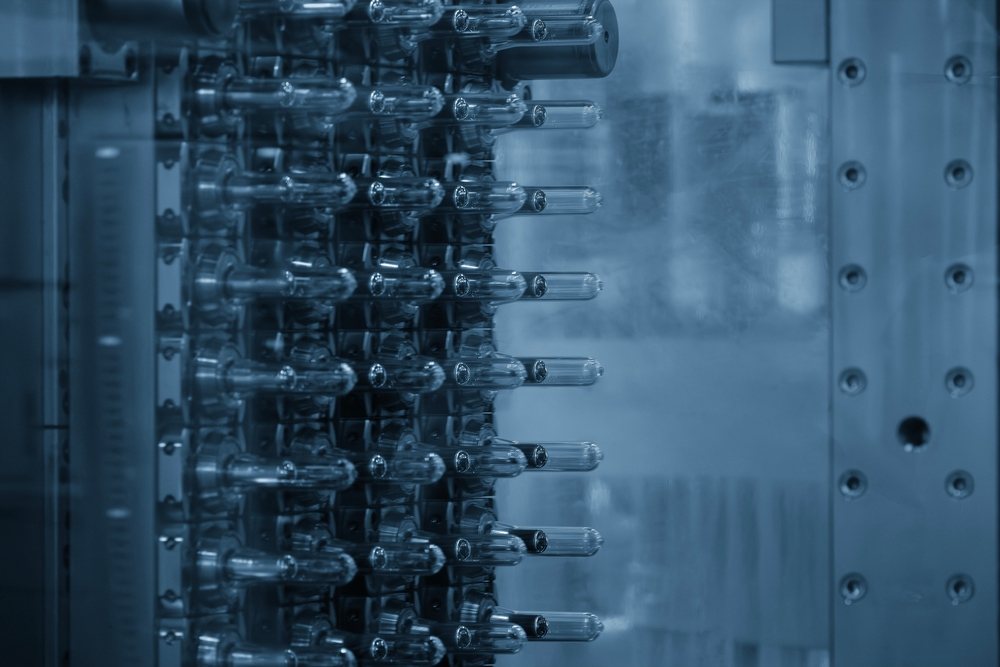
With injection molding and blow molding separated, the injection molding machine can fully leverage the capacity advantages of multi-cavity molds. Currently available standard injection molding machines on the market can be equipped with 32‑cavity, 48‑cavity, or even 64‑cavity molds, producing a large number of preforms in a single cycle—with daily output per machine reaching tens of thousands to over a hundred thousand pieces.
These preforms can be centrally stored and then distributed as needed to one or multiple blow molding machines, enabling a flexible configuration where “one injection molder supplies multiple blow molders.” The injection side maintains continuous high-volume production, while the blow molding side consumes the preforms on demand according to order schedules. The high output of preforms directly translates into flexible supply of finished bottles in terms of both quantity and specifications.
The single-stage blow molding, however, lacks this flexibility. On a rigid in-line production line, the number of cavities in the injection mold must be matched to that of the blow mold, and the disparity between the two cannot be too great—meaning that even if the injection side is capable of higher cavity counts, it will be held back by the cavity limitations on the blow molding side. Typically, the injection cavity count in the single-stage blow molding is kept to 4–8 cavities, with the corresponding blow cavity count similarly constrained, resulting in daily output that falls far short of that achieved by independent injection or blow molding equipment.
By decoupling preform molding from blow molding, the two-stage blow molding allows the injection molding machine to run continuously at high speed to produce preforms, while the blow molding machine can focus on high-efficiency blowing. The overall forming cycle is significantly shortened, and both stages can operate at their respective optimal rhythms—making the two-stage blow molding particularly well-suited for large-volume, standardized mass-production demands.
Plastic Container Packaging Solutions
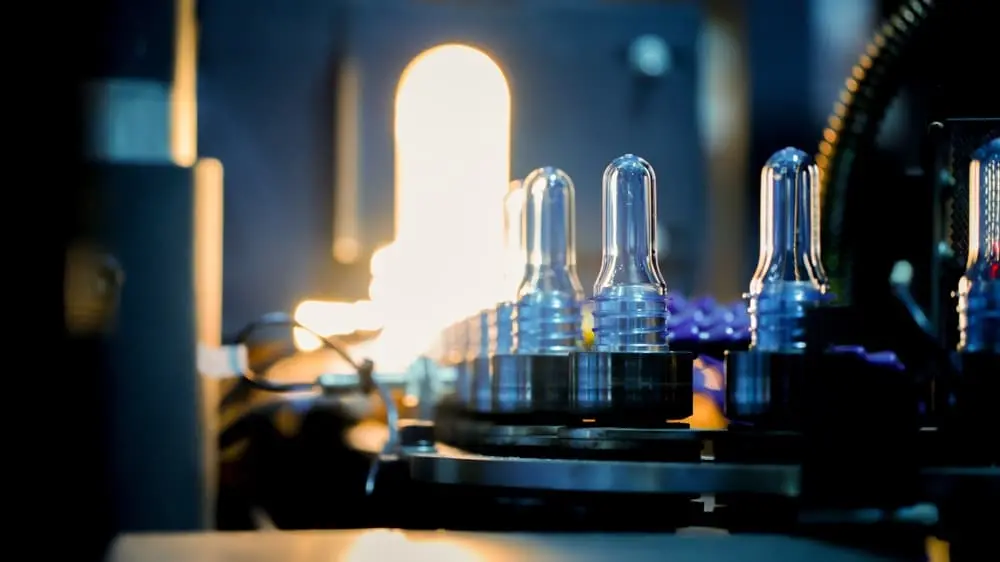
In summary, the two-stage blow molding delivers a practical and cost-effective technical solution for packaging manufacturers, characterized by lower upfront capital expenditure, greater scalability in production capacity, and enhanced flexibility in product changeovers. It is for these reasons that the two-step preform-to-blow process continues to dominate the mainstream of China’s plastic bottle packaging industry.
Our facility features a dedicated preform injection molding workshop, along with separate blow molding workshops for PET, PE, and other material types—providing us with full end-to-end control over the entire production chain, from preform molding to finished bottle blowing. We have built a comprehensive product portfolio covering a wide range of packaging specifications and bottle configurations, enabling us to offer customized solutions tailored to each client’s specific filling needs, application environments, and cost targets.
If you are seeking a packaging partner that offers both stable supply and rapid responsiveness, we’d love to hear what you’re working on and see how we can help.