Book Categories:

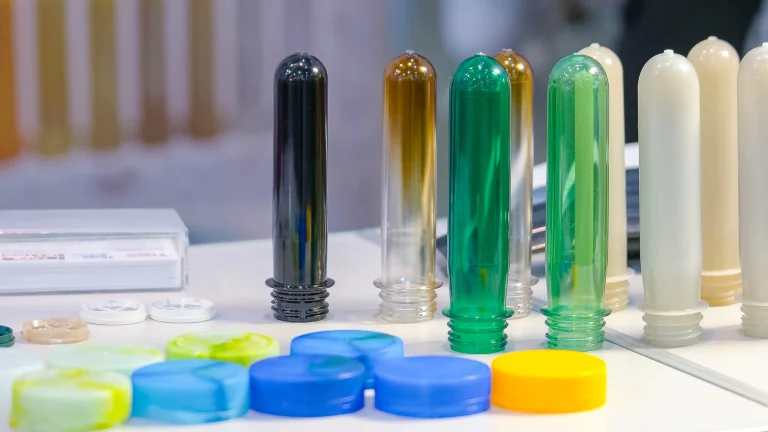
PET, short for Polyethylene Terephthalate, is one of the most widely used plastic materials today and is the preferred material for preforms manufacturing. In the packaging industry, common preform materials include PP, PET, rPET, and PETG, among others. These materials are generally safe for direct contact with most cosmetic and food products, offering good compatibility and safety, which makes them the go-to choices for preform production.
Among these various preform materials, PET stands out particularly due to its well-rounded performance advantages. Today, we will take an in-depth look at what makes PET such a noteworthy material for preform applications.
1. Lightweighting for Cost Reduction and Efficiency

In our article “Why Make Preforms Before Bottles?“ we previously explored a question: since bottles could originally be blow-molded directly, why was the intermediate step of preform production introduced—seemingly making the process more complex? The key lies precisely in the lightweight advantage of preforms.
In the past, shipping empty bottles directly meant that freight costs had to account for both the volume and weight of the packaging, making it prohibitively expensive. Preforms, however, are compact in size and light in weight, making them ideal for long-distance transportation. They can be shipped efficiently and then blow-molded into bottles at the destination, significantly reducing the logistics costs associated with shipping large-volume empty containers over long distances.
Thus, while the introduction of preforms may add an extra step to the production process, it substantially reduces the overall cost of PET packaging—a classic approach of “trading process complexity for economic efficiency.”
2. High Transparency

If lightweighting is one major advantage of the preform process, then PP or PETG might seem equally competitive on that front alone. So why did PET ultimately stand out among so many material options to become the most widely used preform material? The answer lies in another core attribute—high transparency—along with its equally critical ease of processability.
Let’s start with transparency. PET products offer a glass-like clarity that is particularly prized in industries with high visual presentation standards, such as cosmetics, beverages, and personal care. Consumers tend to prefer packaging that allows them to clearly see the color and consistency of the contents—a sense of intuitive trust that semi-transparent materials like PP find difficult to replicate.
PETG, while equally transparent, comes with a higher cost and presents significantly greater challenges in processing. To achieve a high-gloss, streak-free finish with PETG, the production control at both the preform and blow-molding stages demands extensive experience and technical expertise. PP, on the other hand, finds its main advantage as a preform material in heat resistance—containers requiring hot-fill applications tend to favor PP preforms.
3. Impact Resistance and Compression Strength

Beyond transparency, PET also offers excellent toughness and impact resistance, ensuring that bottles do not suffer from breakage or deformation due to stacking pressure during mass production and transportation.
PET preforms are not only lightweight but also resistant to dropping. In contrast, other transparent plastics such as PS, PMMA, and ABS, while offering good clarity, are more brittle and prone to scratching or shattering upon impact. All things considered, PET possesses distinct physical property advantages as a transparent plastic preform material.
4. Excellent Gas Barrier Properties
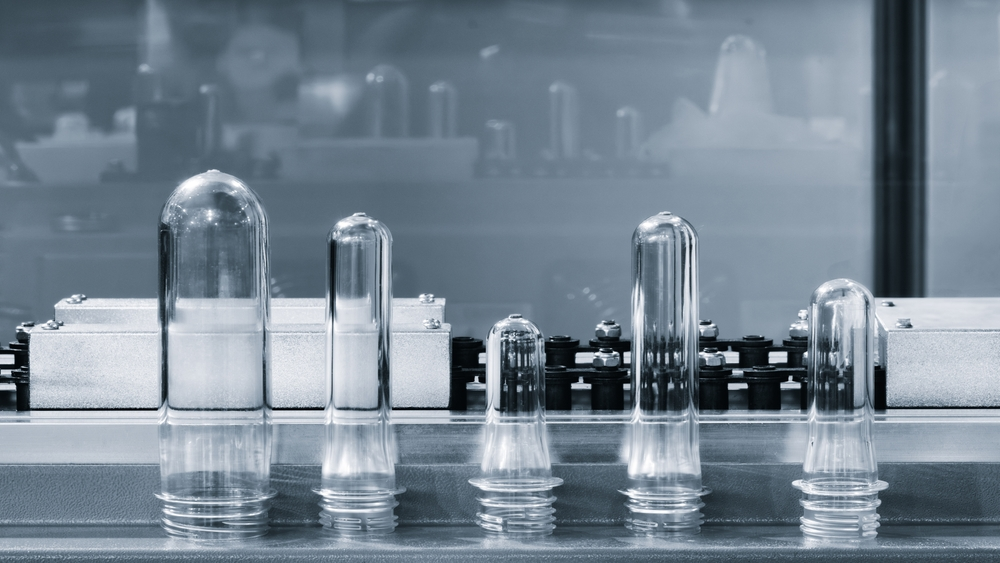
Another key factor in choosing PET as a preform material lies in its outstanding barrier performance, particularly its balanced capabilities in oxygen resistance and carbon dioxide retention. PET offers excellent CO₂ barrier properties, making it highly suitable for blow-molding carbonated beverages or sparkling water products, effectively preventing gas escape and preserving the effervescent mouthfeel of the drink.
At the same time, its barrier performance against water vapor and oxygen is also commendable, helping to prevent moisture loss or oxidative degradation of the contents, thereby meeting the shelf-life requirements of products such as juices and teas under ambient storage conditions.
This means that beverage bottles, food containers, or cosmetic bottles made from PET preforms can significantly extend product freshness—a feature that is especially critical for carbonated drinks and oxygen-sensitive products.
Going a step further, PET’s dominance in the beverage packaging sector can also be attributed to its unique biaxial orientation property. During the blow-molding process, PET molecular chains become oriented and stretched, forming a dense crystalline structure that acts like an invisible “gas barrier,” effectively locking carbon dioxide inside the bottle.
It is this dual assurance of “material properties plus process enhancement” that renders PET irreplaceable in carbonated beverage packaging and cements its long-standing position as the mainstream choice in the preform market.
5. Excellent Chemical Resistance
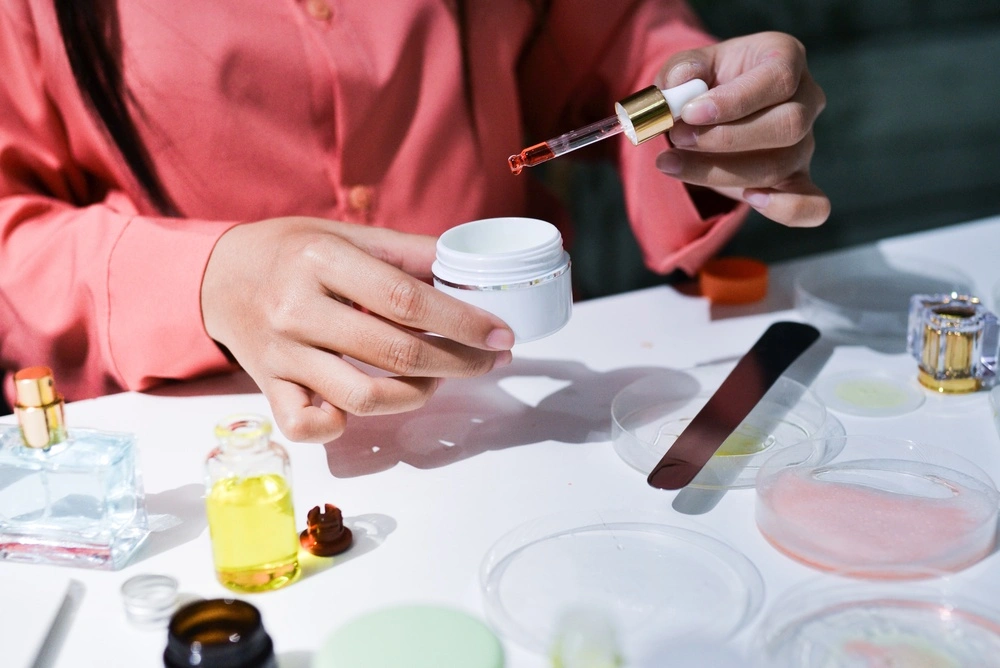
Another important reason for choosing PET as a preform material lies in its outstanding chemical resistance. PET exhibits good resistance to most organic solvents, dilute acids, dilute alkalis, and oils/fats. This means that containers blow-molded from PET preforms are less prone to material swelling, crazing, or performance degradation when filled with oil-based cosmetic products (such as lotions and serums), alcohol-based personal care items (such as mouthwashes and perfumes), as well as acidic or mildly alkaline food products (such as fruit juices and condiments)—fully ensuring the stability of the contents and the safety of the packaging.
However, it is worth noting that although PET’s sealing and barrier properties perform excellently among most plastics, there is still a gap when compared to glass bottles—particularly glass perfume bottles with snap-on spray closures. For brands that have strict requirements regarding the longevity and volatility of fragrance, we would generally recommend opting for glass perfume bottles instead.
6. 100% Recyclable

As the preferred material for preform production, PET offers another significant advantage: it is fully recyclable, and the recycling technology for PET is already well-established. Recycled PET, commonly known as rPET (or PCR), can be reused to manufacture new preforms or other polyester products such as fibers and packaging materials, aligning with the growing trend toward environmental sustainability. Furthermore, the high recyclability of PET preforms and bottles further reduces their environmental footprint.
7. Conclusion

In summary, PET has become the undisputed premier material in the field of preform manufacturing due to its comprehensive advantages across multiple dimensions—lightweight logistics, high transparency, barrier performance for freshness preservation, and chemical resistance. These properties complement each other, enabling PET preforms to deliver both production efficiency and a superior end-user experience, meeting the diverse packaging needs of products ranging from carbonated beverages and juices to teas, and from skincare to personal care items.
As a manufacturer with over a decade of professional experience in preform production, we have consistently focused on this field, committed to integrating the material properties of PET with process optimization. Our preform specifications now comprehensively cover multiple industries including food, beverages, and cosmetics, and can be tailored to accommodate different capacities, wall thicknesses, and bottle design requirements.
Whether you are seeking stable, reliable large-volume supply or wish to develop exclusive preform solutions for specific products, we are ready to leverage our mature technical expertise and flexible production capabilities to provide you with efficient and high-quality supporting services.