Book Categories:

In cosmetic packaging, cap and closure are often the last parts to be noticed—when consumers pick up a product, their eyes usually fall on the bottle body first, and only then do they turn their attention to the components attached to it. Interestingly, however, it is precisely these cap and closure that deliver the very first tactile experience of the product to the consumer.
Whether a cap or closure is well-designed does not solely depend on a unique shape or premium materials. More often than not, a good cap and closure design is the result of a careful balance between functionality, tactile feel, visual language, and production feasibility. It must not only fulfill basic functions—ensuring sealing, leak prevention, and ease of opening—but also add a dimension to the product that can be “felt,” through nuances in material, texture, color, or structural detail.
Today, we would like to share some inspiring cap and closure design cases, examining them from different perspectives—material, surface finishing, and functional design. Through these examples, we hope to spark new ideas and provide practical insights that will help you approach the selection and customization of cap and closure with greater clarity and confidence.
1. Surface Customization on Cap and Closure
In packaging design, creating a distinctive cap and closure for your product does not always require reinventing the structural form. Customizing the shape of a cap or pump often involves mold development costs, engineering validation, and extended lead times—which can present a significant barrier for projects with limited budgets or for first-time product launches.
Therefore, starting with surface finishing offers a more practical path that balances both effect and cost. Below, we will share several common finishing techniques for caps and closures. By understanding the applicable effects and limitations of each process, you will be better equipped to make informed decisions—even when selecting from standard supplier offerings—and know how to give conventional components a distinctive feel.
1.1 Printing and Labeling

Printing and labeling are two of the most familiar customization processes for buyers, and they are also among the more cost-effective surface finishing options. However, most people typically apply them only to the bottle body, rarely considering that the cap or closure can also serve as a canvas for printing or labeling. This is because applying these two processes to caps and closures comes with certain limitations—particularly regarding the structure and available surface area of the accessory.
If your packaging can only be paired with relatively conventional cap and closure designs in terms of appearance, then adding printing or labeling on the top or side surfaces of these closures is a design direction worth exploring. Since these components are often the parts that consumers interact with most frequently, any brand identity or decorative detail applied to them is more likely to be noticed and remembered.
So, sometimes deepening consumers’ brand impression doesn’t require designing overly complex caps or closures from the start. By simply making clever use of the printable or label-friendly areas on conventional caps and closures, you can turn these simple components into brand touchpoints—adding an extra layer of design thoughtfulness to the overall packaging.
1.2 Color Contrast Customization

Printing and labeling are generally only suitable for caps with flat, relatively large surfaces. For more complex dispensing components—such as lotion pumps, spray pumps, or droppers—printing or labeling is often less feasible. If you are looking for a cost-effective way to customize these types of closures, color contrast design is an option worth considering: by using contrasting colors across different components, you can create visual layering that captures consumer attention without the need for complex printing.
However, the challenges of color customization should not be overlooked. These primarily manifest in two areas:
First, minimum order quantities tend to be high—even for a small component like a pump shoulder sleeve, custom color production typically requires a MOQ of 10,000 to 20,000 units.
Second, color matching accuracy is critical. While Pantone codes are a widely used industry reference, the fact remains that Pantone code books are updated annually, and there is often a noticeable color discrepancy between on-screen displays and physical samples. Therefore, when requesting color matching, we strongly recommend providing a physical color sample or color chip as the reference for sampling—rather than relying solely on color numbers or screen captures—to reduce the time and cost associated with repeated sampling due to color deviation.
1.3 Electroplating and Spray Coating

On a visual level, metallic finishes often convey a sense of premium quality and luxury. However, most packaging accessories—especially cap and closure—are typically made from plastics such as PP. To give these components a metallic appearance, electroplating and spray coating are currently the two most widely used finishing processes.
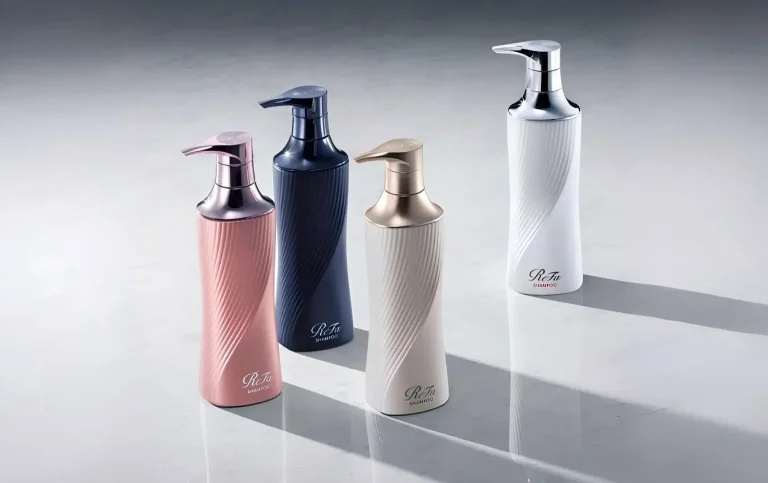
When opting for a metallic finish, there is one detail worth noting: metallic colors are not limited to gold and silver. Rose gold, deep ocean blue, romantic purple, and other colors can also be achieved through electroplating or spray coating. In addition, metallic effects are not confined to high-gloss finishes—matte metallic surfaces can also convey a refined, understated elegance.
That said, metallic color customization also presents its own challenges in color matching—particularly for non-standard metallic colors beyond gold and silver. Such colors are often difficult to formulate accurately using Pantone numbers alone. Suppliers typically need to work from physical samples or rendered design images provided by the brand, often requiring one or two rounds of adjustment to achieve the desired result. If the buyer can provide a physical reference sample upfront, it can significantly reduce sampling costs and lead times, as well as minimize back-and-forth communication during the approval process.
1.4 Hydrographic Transfer Printing (Water Transfer Printing)

Hydrographic transfer is no stranger to most brands—the familiar plastic components with wood-grain finishes found in everyday products are typically achieved through this process. However, many people still have a relatively limited understanding of the variety of patterns and design complexity that hydrographic transfer can actually deliver.
In fact, hydrographic transfer is arguably the most expensive surface finishing technique available in cosmetic packaging, and is typically reserved for high-end or limited-edition product customizations. It allows caps and closures to achieve highly intricate textures and pattern effects.
Due to the inherent randomness of the pattern transfer process, even the same design will present slight variations in detail from piece to piece—creating a “similar but not identical” effect that adds a layer of uniqueness. This characteristic stems directly from the nature of the process itself, and is precisely one of the qualities that sets hydrographic transfer apart from other finishing methods.
When considering hydrographic transfer as a customization option for cap and closure, there is one key point to understand in advance: for patterns or designs that are not commonly available in the market, a dedicated gravure plate must be produced first—and this plate-making cost is one of the main reasons why hydrographic transfer carries a higher price tag. Therefore, before deciding whether to adopt this process, we recommend evaluating the product positioning, the acceptance of the target market, and the overall budget—to determine whether this investment aligns with the product’s broader strategy.
2. Shape and Structural Customization

Surface finishing can give standard accessories a distinctive visual language, but it ultimately works within the confines of an “existing form.” When a brand wants a product to stand out more clearly on the shelf, or needs to convey a specific brand philosophy through the very form of the closure itself, it becomes necessary to move to another level—shape and structural customization.
Customization in this direction involves mold development. The tooling costs and development lead times are naturally far higher than those of surface finishing. Typically, both caps and pumps are produced through injection molding, with mold development costs starting at around USD 4,000 and lead times generally beginning at 45 days. However, the value it brings is equally significant: cap and closure developed specifically for a brand can have its form, proportions, opening mechanism, and grip feel all designed around the product’s core positioning—rather than being compromised within the constraints of existing components.
For brands, the decision to pursue structural customization is often tied to product strategy. When a product needs to establish a long-term presence in the market, or is intended to be sold consistently as part of a core collection, a custom-developed closure can become a recognizable visual signature in the consumer’s mind. The value of this signature lies in the fact that it does not depend on a specific color or texture—it builds brand recognition through form itself. Even without the logo, consumers can still identify the product by the silhouette of its closure.
3. Cap and Closure Custom Solutions

From surface finishing to structural customization, the design possibilities for caps and closures are far more extensive than most people realize. They are not just the “sealing component” of the package—they are the parts that consumers interact with most frequently. Every twist, press, or snap is a silent interaction—and it is precisely these subtle moments that unconsciously shape consumers’ perception of product quality.
We believe that a well-designed cap and closure does more than seal a product functionally—it completes a conversation through experience. Whether it’s giving a closure a metallic finish through electroplating, or creating a proprietary form through structural customization, every design decision will ultimately be validated in the hands of the consumer.
If you are looking for the right cap and closure solution for your product—whether it’s a surface finish upgrade for an existing style or a structural development from scratch—we welcome you to reach out. We can provide recommendations and support across material selection, process matching, and structural feasibility—helping you turn your ideas into a packaging solution that works.