Book Categories:

1. Definition of Plastic Free Packaging
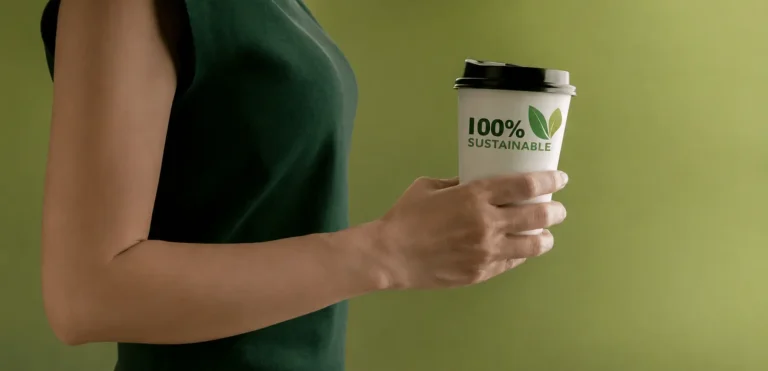
Plastic free packaging has become a highly popular environmental concept in recent years, referring to packaging that either completely eliminates conventional petroleum-based plastics—such as polyethylene (PE), polypropylene (PP), and polyvinyl chloride (PVC)—or replaces them with biodegradable or recyclable materials.
However, in the packaging industry, achieving 100% plastic free packaging while maintaining cost control and practicality remains an extremely challenging endeavor. Take, for example, a plastic-free shampoo bottle: while the bottle itself can be made entirely from glass or aluminum, components such as pumps and closures are difficult to replace with mature alternatives, given that the vast majority of such fittings on the market are manufactured from plastic.
Therefore, when discussing plastic-free packaging, we should focus less on absolute definitions and more on the core message it conveys—raising environmental awareness and reducing our dependence on plastics.
Today, we would like to share with you some everyday packaging material solutions that can serve as alternatives to plastic, offering practical and actionable insights to support your sustainable product planning efforts.
2. Plastic Free Packaging Solutions
Through the above analysis, we believe that you now have a clearer understanding of the conceptual framework and applicable scope of plastic-free packaging solutions. It must be acknowledged that, given the current limitations of material properties, cost structures, and existing recycling infrastructure, plastic-free packaging is unlikely to achieve full-scale adoption across all application scenarios in the short term.
Nevertheless, this should not deter us from making steady progress toward the goal of “reducing plastic dependence as much as possible”—every substitution, however small, represents a tangible contribution to healthier living and a more sustainable future.
2.1 Glass Packaging

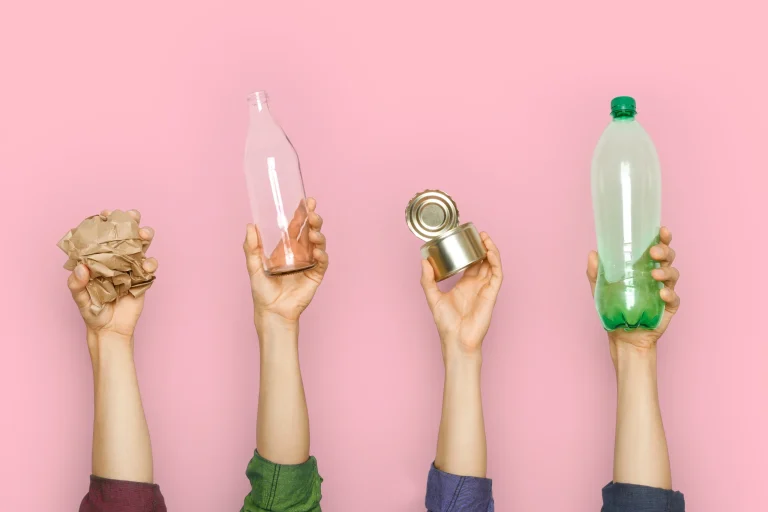
Glass is widely regarded as an environmentally friendly material, as it is made primarily from natural minerals—with silica sand being the main component—and contains no petroleum-based materials. As such, when considering plastic free packaging solutions, glass is often one of the first options that comes to mind. Whether in the food, pharmaceutical, or cosmetics sectors, glass packaging has already achieved extensive application and mature technological development.
However, whether glass packaging can achieve 100% plastic free status cannot be generalized—it ultimately depends on the product’s specific attributes, its intended use scenario, and the overall design of the packaging system. Even a combination such as a glass bottle with an aluminum closure may still incorporate plastic components—for instance, PE liners—to meet sealing and cushioning requirements. Therefore, in the strictest sense, “glass packaging” and “100% plastic-free packaging” cannot be directly equated. Brands considering glass as a packaging solution must still conduct a thorough, component-by-component review and verification of every part of the packaging system.
2.2 Aluminum Packaging

Aluminum is another widely recognized, environmentally friendly material in the packaging sector. Its raw material is derived from bauxite ore, which is processed through refining and electrolytic smelting, and the material itself contains no petroleum-based components. In the context of plastic free packaging, aluminum packaging is often regarded as an ideal choice for applications in food, beverages, pharmaceuticals, and personal care products, owing to its lightweight nature, high barrier properties, and excellent recyclability.
It is worth noting that aluminum, like glass, is among the few materials that can be recycled indefinitely with virtually no loss of mechanical properties. Both materials benefit from relatively well-established recycling systems in most markets, and outperform traditional plastics in terms of recycling efficiency and regeneration rates. Therefore, beyond aligning with the concept of plastic-free packaging, aluminum and glass also derive a strong additional environmental advantage from their outstanding performance at the end-of-life stage.
2.3 Biobased Packaging

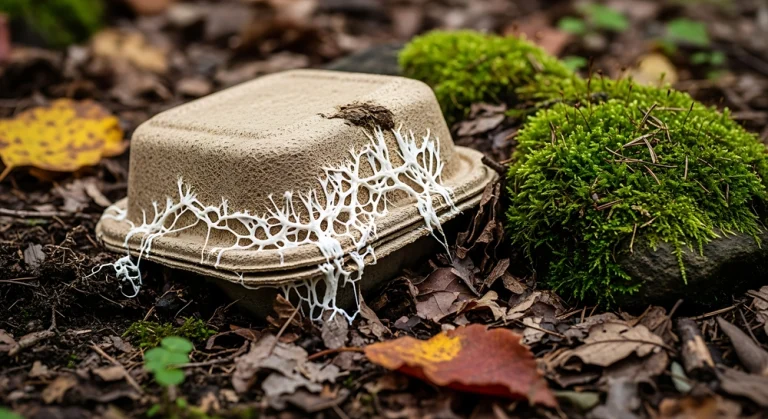
Bio-based packaging refers to packaging products manufactured from renewable natural resources—such as plant fibers (e.g., sugarcane bagasse, straw), starches (e.g., corn, potato), or microorganisms—through processes including biological fermentation, chemical modification, or composite processing. Although most bio-based packaging currently appears in the form of composite materials, it fundamentally avoids petroleum-based feedstocks at the source, thereby effectively reducing dependence on fossil fuels. From a macro perspective, bio-based materials are widely regarded as one of the key pathways for transitioning plastic packaging toward greater sustainability, and are even viewed by some industry experts as a potential ultimate solution for achieving long-term “plastic free” goals.
At present, the bio-based materials sector has witnessed numerous innovative breakthroughs, and we have also previously shared 10 inspiring case studies on bio-based packaging. However, upon closer examination, it becomes clear that the widespread adoption of bio-based packaging still faces multiple practical constraints—including relatively high development costs, as well as the differentiated performance requirements across various product categories (e.g., barrier properties, durability, and processing compatibility), which make it difficult for bio-based materials to suit all product types. Overall, this technology still requires considerable time and sustained investment for iterative maturation before it can achieve full-scale commercial viability.
In summary, when evaluating bio-based packaging within the context of “plastic reduction” or even “plastic free” objectives, it does present a highly promising direction. Nevertheless, in practical application, brands must still carefully assess factors such as degradation conditions, full lifecycle costs, and performance fit, in light of their specific product requirements, in order to make well-informed and appropriate decisions.
2.4 Ceramic Packaging

Among the many options for plastic free packaging, ceramics occupy a rather distinctive position. Made from natural clay and shaped through high-temperature firing, the entire production process involves no petroleum-based materials, making the material itself inherently aligned with the definition of plastic-free. Compared to materials such as glass and aluminum, what sets ceramic packaging apart is that it is not merely a single-use container, but an object that can be preserved and cherished over time.
In terms of applications, ceramic packaging is relatively common in the food sector, where it is often used for tea leaves, spices, dried goods, and similar products. In recent years, the beauty and cosmetics industry has also begun to embrace the unique tactile and aesthetic qualities of ceramics, incorporating them into the packaging design of premium perfume bottles and skincare jars to elevate brand sophistication and sensory appeal.
However, while ceramic packaging can achieve plastic free status in its main body, its suitability is highly dependent on the specific attributes and usage scenarios of the product, and its broader adoption faces several practical challenges that cannot be overlooked. First, ceramics are inherently fragile and require adequate cushioning and protective lining—traditionally provided by plastic foams. Recent innovations, however, have explored the use of corrugated board structural designs as a foam replacement, paving the way for fully paper-based plastic-free packaging solutions. Second, the recycling infrastructure for ceramics remains underdeveloped, with very few regions having dedicated ceramic collection and recycling systems in place, resulting in relatively limited end-of-life disposal pathways. Therefore, when brands adopt ceramic plastic-free packaging, it is advisable to extend their considerations beyond the point of sale—by providing consumers with guidance on secondary use or recycling options for ceramic containers. Such efforts not only extend the lifecycle of the packaging but also help minimize unnecessary waste generation.
2.5 Wood Packaging

In our discussions on reusable packaging, we have previously touched upon bamboo and wood as material options. However, when evaluated against the premise of achieving plastic-free packaging, wood-based packaging generally offers greater feasibility and broader applicability than bamboo. Today, wooden packaging comes in a wide variety of forms, extending well beyond the traditional approach of carving solid timber. Through the processing of cork materials, for instance, manufacturers can achieve significantly greater design flexibility to meet more diverse packaging requirements.
Cork packaging is highly distinctive in terms of its color, texture, and tactile appeal. Moreover, the raw material is sourced from the bark of the cork oak tree (Quercus suber), and the harvesting process does not require tree felling—the bark regenerates after each harvest, making it a classic example of a renewable natural material. The overall processing chain is relatively simple, with low energy consumption, and the material can biodegrade naturally at the end of its life, imposing a minimal environmental burden.
In terms of performance, cork is lightweight, resilient, and elastic, offering both cushioning protection and a pleasant tactile quality. These properties give cork a unique positioning in packaging applications—it can serve both functional roles, such as stoppers and closures, and decorative roles, such as gift packaging or custom-branded sleeve boxes, adding a natural and rustic brand tone to the product.
That said, cork packaging does have certain limitations in practical use. Its relatively soft texture means it lacks the structural strength of rigid materials, making it less suitable for heavy loads or high-compression applications—it is better suited for lightweight products or as inner cushioning. Additionally, cork is sensitive to humidity; prolonged exposure to high-moisture environments may lead to deformation or mold growth, so its storage and transport conditions must be carefully evaluated.
Overall, cork packaging is best positioned as a differentiated option that combines environmental attributes with experiential value. While it cannot replace all other materials, in scenarios such as lightweight products, gift packaging, and branded merchandise, the natural, warm, and sustainable brand language conveyed by cork is difficult to replicate with any other material.
2.6 Pulp Packaging

Paper-based packaging is the most mature and widely adopted category within plastic-free packaging solutions, and today we would like to focus on one particular branch within it—pulp packaging.
Pulp packaging is commonly referred to in the industry as molded pulp products. Its core distinction from conventional paperboard packaging lies in the forming process: standard paper packaging is created by folding and bonding paper sheets, whereas molded pulp is formed by directly adsorbing or pressing paper pulp into specific three-dimensional shapes using molds. This enables a much closer fit to product contours, providing customized cushioning and protection.
One important point to bear in mind is that traditional paper packaging often requires a plastic coating or lamination—such as PE extrusion coating—to achieve water and oil resistance. This essentially turns it into a “paper plastic composite” material, which cannot be classified as genuinely plastic-free. Therefore, when sourcing paper-based packaging, it is always worth asking one key question: Does this packaging contain any plastic coating layer in its material structure?
In recent years, the industry has been actively developing new fluorine-free and plastic free barrier technologies. These include incorporating functional additives directly into the pulp furnish, or applying environmentally friendly coatings—such as nanocellulose combined with natural latex—onto the surface. These innovations enable the paper itself to achieve water and oil resistance without the need for a plastic lamination layer, thereby realizing a truly all-paper, plastic-free packaging solution.
Looking ahead, as technologies continue to mature and brand demand keeps growing, pulp-based packaging is poised to play an increasingly pivotal role in the transition toward plastic free packaging. For brands currently exploring plastic free pathways, pulp molding may well be a worthwhile starting point for evaluation—but before making a choice, it never hurts to ask: Is it truly plastic-free?
3. Our Honest Thoughts on “Plastic Free”

To be honest, whether in daily life or in packaging design and production, it is almost impossible to eliminate plastic 100%. But that absolutely does not mean we should give up exploring sustainable packaging solutions or stop pursuing the goal of being “greener.”
As manufacturers, what we can do is to create eco-friendly packaging that better meets the needs of the present and the future — based on brands’ own judgments and forward-looking insights into packaging market trends. Innovation has never been a one-sided effort — it requires understanding and collaboration between brands, supply chains, and consumers.
With over a decade of experience in packaging production and trade, what we can offer our clients has never been limited to just plastic packaging solutions. We want to be your partner on the journey toward greener packaging.
If you are also looking for more environmentally friendly and sustainable packaging solutions, please feel free to contact us or leave us a message. Let’s work together to create truly market-ready green packaging and contribute to a more sustainable economy.