Book Categories:

When discussing sustainable packaging design, a number of related terms are likely to come to mind, such as reusable packaging, eco-friendly packaging, and refillable packaging. So, do all of these concepts fall under the umbrella of sustainable packaging? And what are the differences and connections between them?
To help brands and readers gain a more precise understanding of what sustainable packaging truly means—and to more effectively apply its principles in product packaging design—this article systematically unpacks the concept of “sustainable packaging” and compares it with several key related terms.
1. Definition of Sustainable Packaging

In the past, the concept of “sustainable packaging” was quite vague for both producers and consumers, lacking a clear and unified standard. The closest tangible expression was that older generations would reuse packaging as much as possible. In an era of material scarcity and high prices, such frugality seemed to be the best representation of sustainable packaging.
However, over the past 50 years, as living standards have continued to improve, consumer expectations have also evolved. More efficient product lifecycles and the trend toward global supply chains have driven the rapid emergence of various new materials, along with the widespread adoption of packaging. From well-presented fruits and cosmetics in supermarkets to protective packaging for large items, packaging has permeated nearly every aspect of our daily lives.
As human demands continue to grow, the world is facing increasing environmental degradation, ecological imbalance, and more frequent extreme weather events. People have come to recognize the impact of waste on the environment—especially the damaging effects of single-use plastics. As a result, environmental protection has now become a widely shared global consensus on development.
In the long run, sustainable packaging represents an opportunity-rich and promising field, both now and in the future. Many countries, regions, social organizations, and brands have begun issuing regulations, guidelines, and checklists related to sustainable packaging.
While the specific goals may vary slightly across different parties, the general consensus is that sustainable packaging refers to packaging solutions that minimize environmental impact throughout their entire lifecycle—from design, production, and transport to use and disposal. More specifically, sustainable packaging must meet at least the following three criteria across its lifecycle:
Economic dimension: Sustainable packaging should be cost-effective, meeting market requirements for performance and competitiveness. If the price is too high, it will be difficult to promote and sustain its use.
Environmental dimension: Sustainable packaging should benefit the environment and ecosystem at every stage, including raw material extraction, manufacturing, use, and end-of-life disposal.
Social dimension: The production process of sustainable packaging should follow responsible management practices, avoiding the generation of toxic or hazardous substances and ensuring that human health and safety are not compromised.
2. The Current Landscape of Sustainable Packaging
To put sustainable packaging design into practice more effectively, it is not enough to simply understand its definition. We also need to take into account the current stage of development of sustainable packaging, gain a clear grasp of real market demands, and have a solid understanding of the challenges and barriers it faces—only then can we make more targeted design decisions.
Below are some real-world observations related to sustainability that we have summarized from our experience in the packaging industry. By taking a closer look at the current state of sustainable development within the industry, we aim to support a more comprehensive, multi-dimensional perspective when designing sustainable packaging. Our goal is to help make packaging solutions more practical and implementable, as well as better equipped to withstand the test of the market in the future.
2.1 Expansion and Dilution of the Concept System
While there is now a basic consensus on the core principles of sustainable development—as reflected in the definition of sustainable packaging above, which generally recognizes that sustainability must cover the three dimensions of social, ecological, and economic aspects—it remains difficult to establish a single, precise definition of “sustainable packaging” in practice. This is because institutions in different countries and regions, as well as practitioners across various industries, have different perspectives on what sustainable development means.
As a result, we have seen the emergence of a dozen or more sub-concepts related to sustainable packaging, such as eco-friendly packaging, bio-based packaging, compostable packaging, degradable packaging, and recycled-content packaging. The following are the main concepts commonly found in the market today that are associated with sustainable packaging.
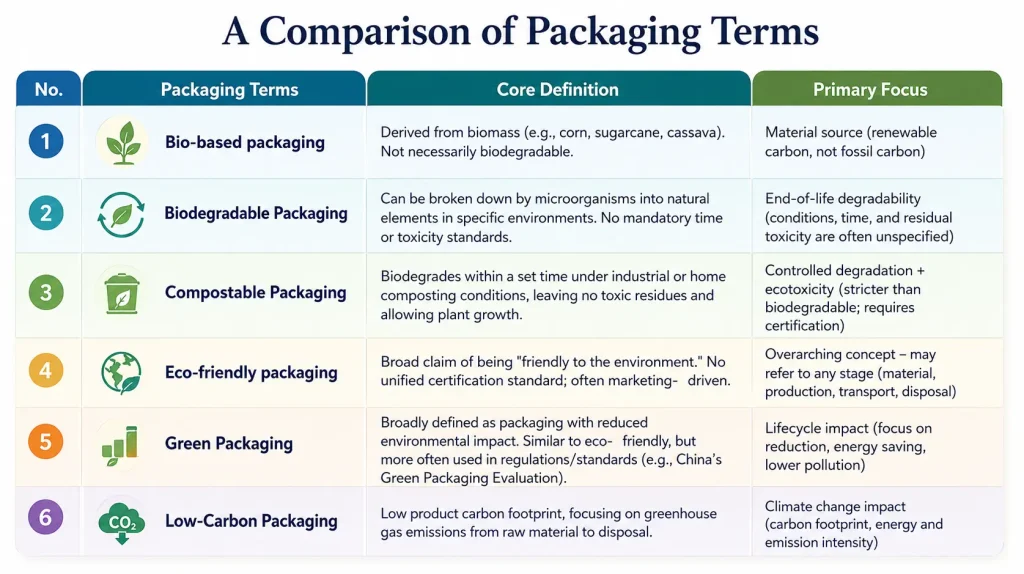

From the comparison above, it is not difficult to see that achieving 100% of the goal of “sustainable packaging” is no easy task, as very few solutions are able to fully integrate the economic, social, and environmental dimensions across the entire packaging lifecycle.
Given current technological capabilities and practical costs, the ten types of eco-friendly packaging mentioned above represent the most realistic and feasible state of affairs at present. Although each focuses on a different environmental aspect, they all meet part of the definition of sustainable packaging to a certain extent—namely, reducing the negative environmental impact of packaging within their respective lifecycles.
2.2 From Sustainable Packaging Initiatives to Mandatory Regulations
In the past, the concept of sustainable packaging remained fairly vague. Both industry producers and everyday consumers—lacking a unified reference point—found it difficult to determine whether a product’s packaging was truly eco‑friendly or aligned with the principles of sustainable development. For a long time, this ambiguity stood as a major barrier to the advancement of sustainable packaging.
However, positive changes have begun to emerge over the past two years. Many countries and regions have started to formalize and regulate concepts and practices that were previously only at the level of voluntary initiatives, such as sustainable packaging and eco‑friendly packaging, and have introduced corresponding laws and regulations to guide producers and consumers toward greener packaging.
Examples include the EU’s Packaging and Packaging Waste Regulation (PPWR), France’s Anti‑waste and Circular Economy Law, and China’s Green Packaging Evaluation Methods and Criteria. These frameworks have begun to establish quantifiable legal standards for sustainable packaging, including minimum recycled content requirements, timelines for banning non‑recyclable packaging, differentiated EPR eco‑modulation fees, technical specifications for recyclable packaging, and maximum void space ratios to effectively curb over‑packaging.
These government‑level policies and regulations are expected to put an end to vague eco‑friendly packaging claims and guide the industry toward designing for recyclability and degradability from the very start. It is foreseeable that in the years ahead, sectors ranging from cosmetic packaging and food packaging to courier parcels will undergo systematic, regulatory upgrades. The concept of sustainable packaging will gradually become clearer, ultimately leading to a well‑defined, evidence‑based unified standard.
2.3 Mismatch Between Value and Cost
Sustainable packaging often comes with a higher cost—this is likely the first impression most packaging professionals have. From a raw material perspective, new materials that align with environmental and sustainable design principles (such as straw, bagasse, PLA, PHB, PBAT, etc.) are still not widely commercialized, which means their unit price is typically 20% or more higher than that of conventional plastics.
Furthermore, from a production technology standpoint, the design and implementation of sustainable packaging face multiple challenges, including the need to retrofit production lines and upgrade technical staff skills. These adjustments result in higher costs, requiring both suppliers and brands to bear significant R&D investment.
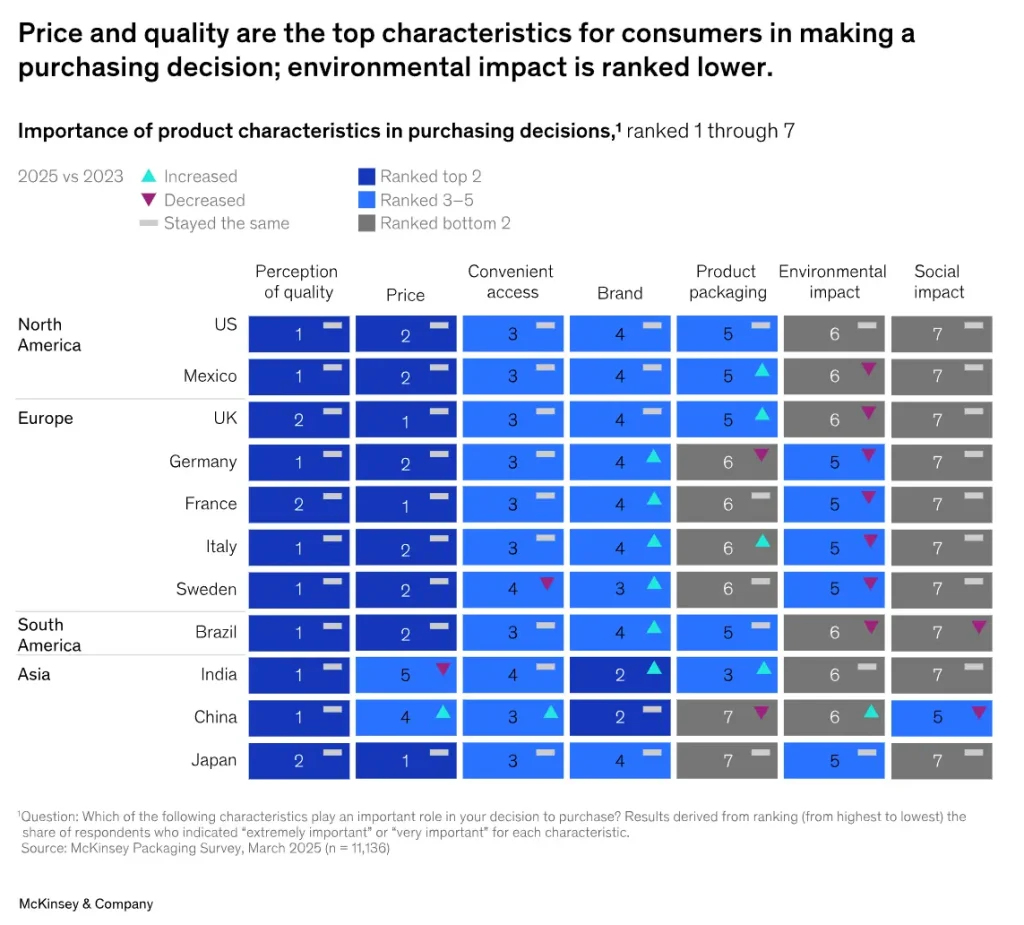
Given the high cost of sustainable packaging, it is essential—before taking action—to understand what global consumers truly think about sustainable packaging, so that we can carefully determine the specific positioning and key messaging of a product’s sustainable packaging. According to the 2025 McKinsey report on sustainable packaging, price and quality remain the most important factors influencing consumer purchasing decisions worldwide.
This price sensitivity is at least partly linked to recent inflation. It is also worth noting that, regardless of product category, consumer concern about the environmental impact of packaging appears to be generally low. That said, there is still a fairly consistent segment of consumers who do consider environmental impact as an important factor in their purchasing decisions.
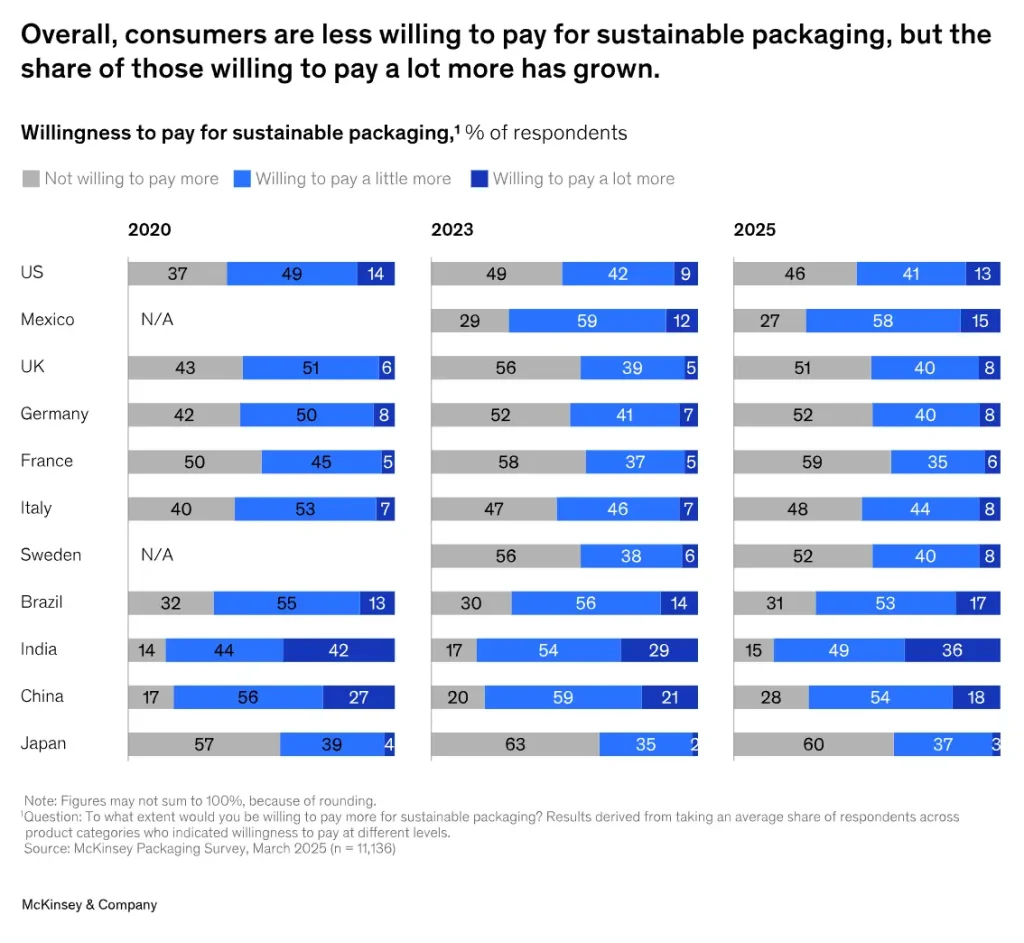
The McKinsey report also includes other valuable survey data and conclusions, particularly regarding whether consumers are willing to pay a premium for sustainable packaging. Although the overall willingness to pay a premium remains low, the percentage of consumers willing to do so is rising year by year. Another somewhat unexpected finding is that when asked who should take the lead in driving the shift toward sustainable packaging, most respondents identified brands and packaging producers as the responsible parties, while placing lower expectations on themselves, retailers, or regulators.
While sustainable packaging is a promising field, producers and brands must still face the real-world challenges of cost and consumer price sensitivity when advancing the design and production of sustainable packaging. If you decide to move forward in this direction, you should also be prepared to take on the primary responsibility for leading the change, rather than relying too heavily on external drivers.
3. Sustainable Packaging Design Strategies
Based on the above analysis of the definition and current state of sustainable packaging, readers should now have a clearer understanding of what is realistically achievable in this field. Admittedly, for small and medium-sized enterprises (SMEs), finding a solution that fully meets the definition of sustainable packaging while also offering cost advantages is simply not feasible.
Therefore, in this article, we will focus on the stages where brands and procurement teams can exercise direct control—namely, packaging design, use, and end-of-life recovery. We will go through each of these stages and highlight practical considerations, helping SME brands develop packaging design and procurement strategies that are both feasible and aligned with sustainable development goals, based on their specific product characteristics and available resources.
3.1 Packaging Minimization
When discussing sustainable packaging design strategies, many companies first think of material substitution—switching to bio-based, biodegradable, or recycled materials. However, for small and medium-sized enterprises (SMEs) with limited resources, a more fundamental and easier-to-implement path is often overlooked: packaging minimization.
Packaging minimization does not simply mean “using less material” in a crude way. Rather, it refers to the systematic elimination of redundant elements—such as excessive space, unnecessary layers, or non-essential structures and decorations—while still ensuring product protection, user experience, and logistics efficiency.
Packaging minimization is not necessarily the lowest-cost design strategy, but it is certainly the most accessible, most controllable, most reliable in terms of return on investment, and most widely applicable starting point among all sustainable strategies. In the long run, adopting a packaging minimization strategy can not only reduce the volume and share of packaging waste in the market but also lower the overall cost per product (including production, shipping, and warehousing), thereby making your product more price-competitive overall.
Today, many brands have successfully applied this strategy—making their packaging lighter, smaller, and more streamlined without changing their core functionality.
3.1.1 Cardboard–Drug Pack
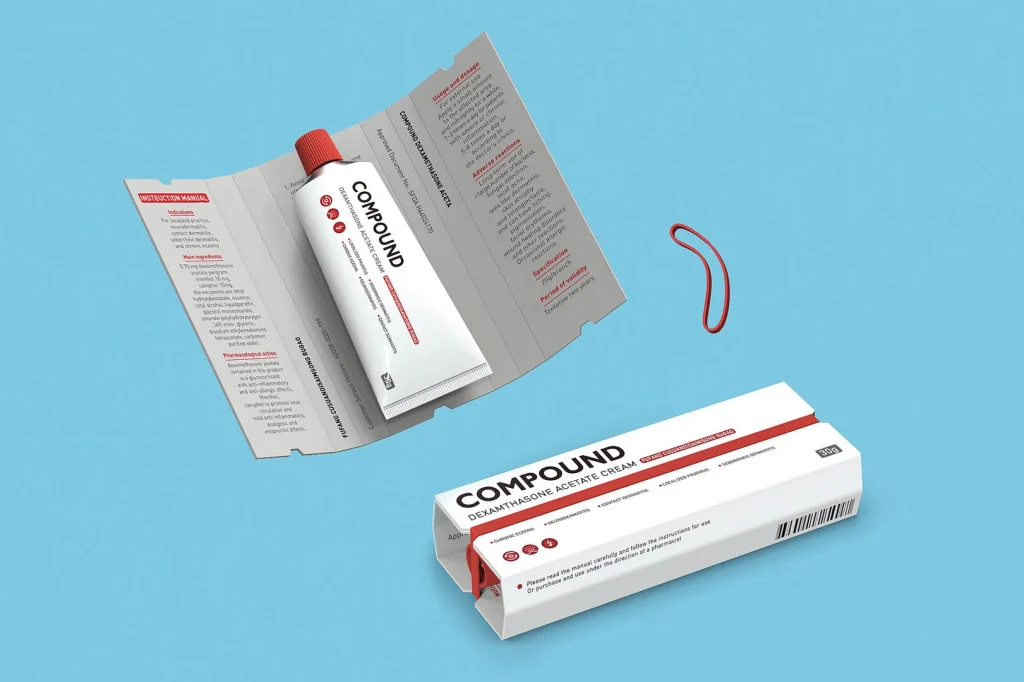
Traditional medicated cream packaging typically consists of a paper box with a separate product instruction leaflet inside. To read the instructions, users must first open the box and take out the cream before they can access the leaflet—a rather cumbersome process.
This paper box design for medicated cream, however, integrates the instructions directly into the packaging structure. To view the instructions, users simply remove the elastic band and unfold the package. As the product is taken out, all the information is immediately visible. This design not only eliminates the inconvenient step of retrieving a separate leaflet but also reduces the amount of paper material used to some extent.
3.1.2 Zero Waste Shops in Germany
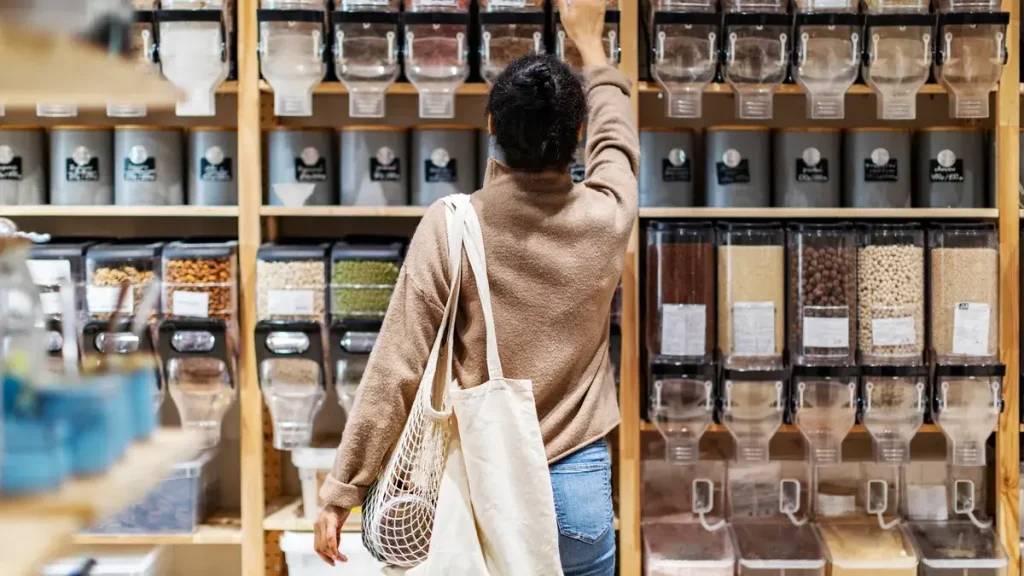
There is a grocery store in Germany called Original Unverpackt. The name means “original packaging” in German and carries a double meaning. The store mainly sells food items such as pasta, spices, and tea, as well as beauty and care products, including shampoo, body wash, and plastic‑free bar soap. All these products are stored in large self‑service containers and sold in bulk, encouraging customers to bring their own packaging and buy only what they need.
The store also operates an online shop. All products purchased through the online shop are shipped in secondary packaging and delivered in partnership with environmentally friendly logistics providers. This retail model not only reduces packaging use at the source but also offers consumers a very direct way to transition toward a more environmentally conscious lifestyle.
3.1.3 Soap Bottles
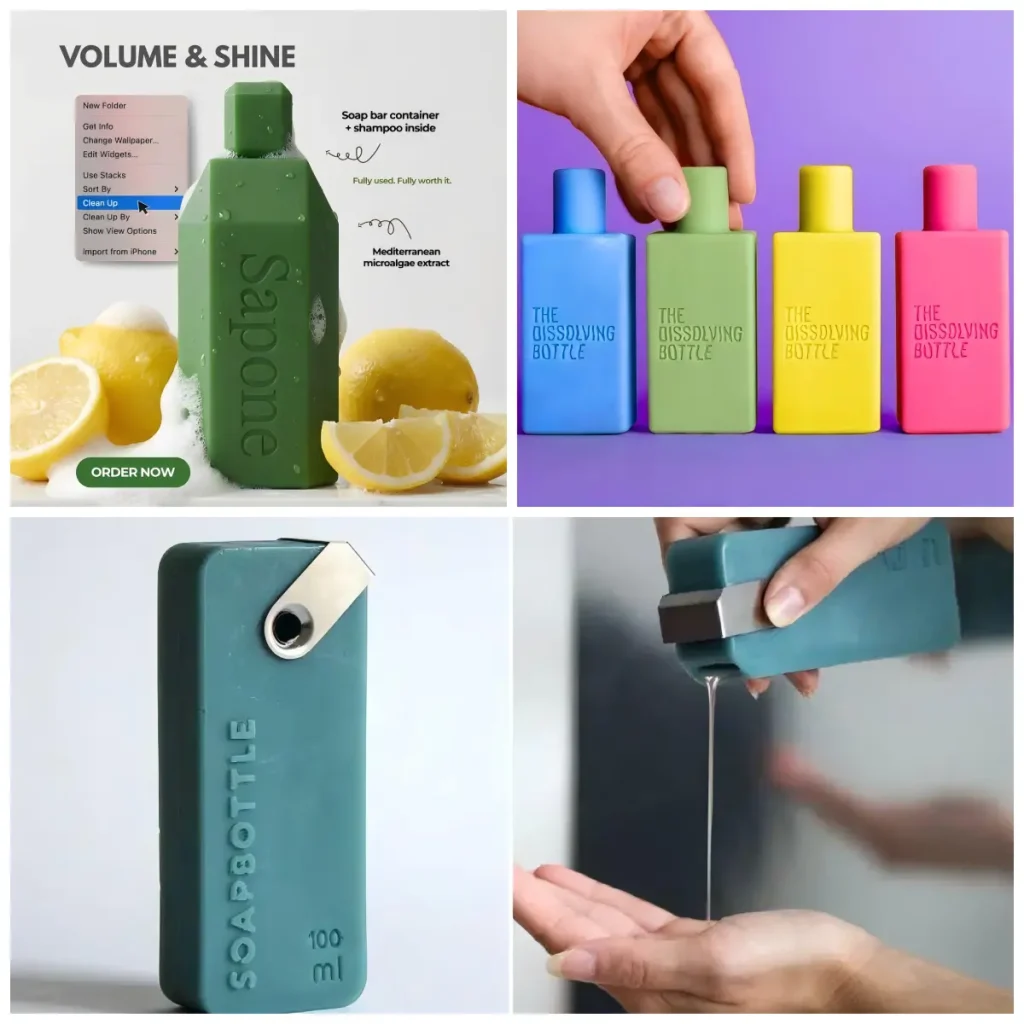
Soap is familiar to most people, but the “soap bottle” is a rare and interesting invention on the market. Brands such as Soap Bottle and Sapone have gained attention for their innovative soap‑container packaging. Instead of using conventional plastic packaging for liquid care products, they have developed a design where the product itself serves as the package—a solid soap molded into a container shape, filled with liquid product. Once the liquid runs out, the outer soap layer can also be used or simply dissolved.
Although neither brand’s products are yet available on the market at the time of this article, the novel concept has already captured the curiosity of many consumers and earned praise from environmental advocates. This design represents the ultimate expression of packaging minimization and turns the idea of “zero waste” into a more imaginative reality.
3.2 Design Sustainable Packaging Structures
For products with a large volume, achieving packaging minimization—let alone going packaging‑free—is often difficult, typically requiring long development cycles and significant mold investment. If packaging minimization is not a viable option, companies can instead try to innovate through packaging structure, making it possible for the packaging to be reused in its structural form, or shifting its fate away from immediate disposal toward a more sustainable afterlife with other functional applications.
This is different from what we previously referred to as “reusable packaging materials.” It allows brands to freely choose suitable packaging materials based on their brand identity, product characteristics, cost budget, and other factors. The key lies in whether the structural design enables consumers, after the product has been used up, to conveniently reuse the packaging or repurpose it in other scenarios.
That said, this design strategy may conflict with the “packaging minimization” principle currently promoted by the EU. This is because designing packaging to be structurally reusable may make it difficult to simultaneously reduce material usage, size, or weight.
In response, Article 10 of the EU Packaging and Packaging Waste Regulation (PPWR), which addresses packaging minimization, clarifies that packaging meeting the definition of reusable packaging—i.e., packaging that can be reused multiple times and can be emptied or disassembled without impairing its continued use function—is generally not subject to the packaging minimization assessment requirements.
3.2.1 Hanger-Convertible Paper Box Packaging

Paper boxes are one of the common material choices for clothing packaging. Not only is the material itself highly recyclable, but it also offers great flexibility for design innovation, making it an excellent example of sustainable packaging structure design. In the past, paper boxes used for clothing were either discarded for recycling or kept by consumers to store other items. However, when it comes to storage functionality, clothing paper boxes are typically designed to be wide and flat—taking up too much space and inconvenient if used for storing clothes, yet not quite the right shape or size for storing other everyday items.
Although paper boxes are inherently eco-friendly and have a relatively wide range of secondary use scenarios, some people are still not satisfied with that. By changing the structural design of the paper box, they have pushed the sustainability of paper packaging to its extreme—ADDLESS Design Studio used FSC‑certified paperboard to create a clothing box that can be folded into a hanger. This design breaks the conventional and somewhat “awkward” fate of paper boxes, giving them truly greater value in terms of reusability.
Similar design strategies are not uncommon on the market. Some brands modify the structure of their paper boxes so that, beyond simply holding the product, the box can ultimately be turned into a tissue box or a remote control storage box that can be reused indefinitely. This type of structural sustainability not only gives packaging a second life but also helps reduce the amount of packaging waste at the source, achieving sustainable packaging design at a relatively low cost.
3.2.2 Personal Care Refills

The most common expression of sustainable packaging design in personal care products is refillable packaging, with the core purpose of guiding consumers to reduce packaging waste during use. This type of sustainable packaging typically adopts a “primary container + replaceable inner refill” structure. The replaceable refill is often minimal in design, featuring fewer structural customizations, easier disassembly, and high-quality recyclability of materials compared to the original product.
Life Supplies hand wash, Wild body wash, and Fussy body wash are all typical examples of this type of refillable packaging. Due to space constraints, this article will use Fussy as a specific case study: Fussy’s original outer container is a minimalist plastic bottle with a pump dispenser. Visually, it moves away from traditional labeling and printed decorations. Instead, the brand logo is directly embossed or engraved into the bottle during the mold development stage, and simple, translucent color customization is chosen to fully highlight the texture and sustainability concept of the refill product.
The inner refill uses aluminum packaging, which is both eco-friendly and offers excellent sealing properties. Its appearance resembles an aluminum can on a beverage shelf—simple yet visually striking, making consumers feel that buying body wash is like embarking on a journey to hydrate their skin. When repurchasing, consumers no longer need to buy a large plastic bottle; they simply purchase a single refill can, with no psychological burden related to sustainable consumption.
Of course, there are many other examples of refillable packaging on the market, which we will not elaborate on here. If you are interested in the development and production of refillable packaging, please feel free to contact us. We would be happy to draw on our own experience and provide you with more constructive suggestions.
3.2.3 Fitness Water Bottle

“Reusability” is a very important design strategy in sustainable packaging. In a broad sense, the secondary use of reusable packaging is not limited to refilling the same type of product for the same purpose. As long as the structural design of the packaging is sound enough to allow it to be repurposed in other scenarios, it can also be an effective way to achieve packaging sustainability.
Due to shipping costs and the market price positioning of this product category, water bottles are typically not overly elaborate in design, and their potential for innovation in the sustainable packaging space seems quite limited. However, some innovative bottle designs have recently emerged on the market, offering another way to guide sustainable behavior.
For example, some brands have designed water bottles that resemble a gym dumbbell. Although this bottle, strictly speaking, is not ideal for repeated water drinking, its structural design directly changes the fate of traditional water bottles—which are typically discarded or recycled—by allowing users to fill it with water and use it for weight training. This can be considered a relatively low-cost approach to achieving sustainability in packaging structure design.
3.3 Simplifying Packaging Surface Customization

If you are a newly established brand with a limited budget for sustainable packaging, that does not mean you cannot practice sustainable product. In fact, simplifying the surface customization of packaging is one of the most intuitive and lowest-cost ways to do so.
Specifically, you can reduce complexity in two dimensions: color and finishing. Reduce the number of colors used and avoid surface treatments that are difficult to clean during the recycling process, such as electroplating, foil stamping, and hydrographic printing. Exercising restraint in packaging customization is in itself a sustainable design choice.
Of course, simplifying packaging surface customization also means facing marketing challenges head-on: when the packaging becomes minimalist, how can your product stand out on crowded shelves and even secure a place for itself? This undoubtedly places higher demands on your product quality and operational capabilities.
Interestingly, although this design strategy presents considerable operational challenges for small and medium-sized brands, looking across the market, nearly all successful brands tend to favor minimalist packaging design. Examples include Tenui, the House of Balance, and ANAZE, among others. Their experiences may offer you some confidence and inspiration.
3.4 Choosing Sustainable Materials

If you have a more substantial budget for sustainable packaging design, opting for sustainable materials—such as biodegradable, recyclable, or renewable options—is a good direction. These types of materials can, to the greatest extent possible, reduce the environmental burden of the product during use and subsequent end-of-life processing.
However, taking a material-focused approach to sustainable packaging can involve relatively high upfront costs. The core reason is that packaging molds are material-specific. Different materials have significantly different physical properties (such as melt flow characteristics). A mold designed for PET typically cannot be used directly to produce PP or PE parts. Therefore, choosing relatively unique sustainable materials often means you will have limited options in terms of packaging shape and structure. If you also require custom appearance finishing, the cost will increase significantly.
That said, some brands with a strong commitment to sustainable living continue to show great dedication in this area. Take Dulcie, a well-known sustainable brand in the UK, as an example. Most of its product packaging is made from recyclable and compostable materials, making the end-of-life recycling process extremely simple and straightforward.
However, it is worth noting that the more easily degradable the packaging, the more important it is for brands to prioritize suppliers located close to their product filling and target marketing regions. Long-term sea or air freight can have an adverse effect on the performance of such packaging.
3.5 Guiding Consumers to Participate in Packaging Recycling
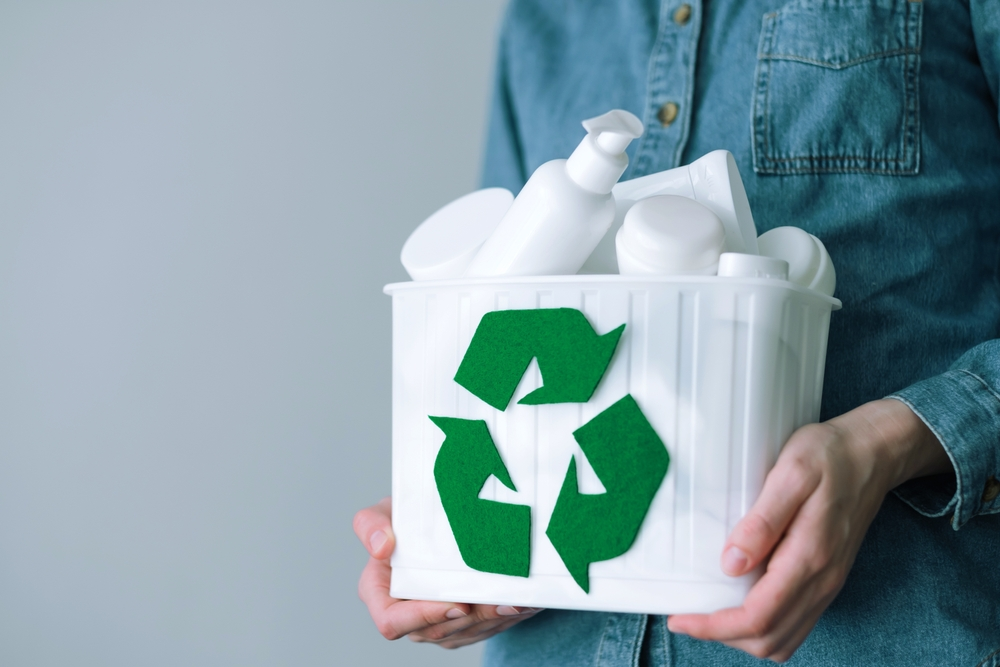
The final step in sustainable packaging design is to consider how the packaging enters the proper recycling process after it has served its purpose. Even if a packaging solution is environmentally friendly in terms of material selection and structural design, its sustainable value will be greatly diminished if it cannot be effectively recycled.
Therefore, when optimizing packaging design, it is worth keeping one key question in mind: How can we make packaging easier for consumers to clean and actively encourage them to participate in recycling?
Specifically, this can be approached from the following aspects:
Easy-to-clean design: Avoid complex internal structures or multi-material laminates whenever possible to reduce the difficulty consumers face when cleaning. For example, wide-mouth openings and removable parts make it easier for residues to be cleared out.
Clear recycling instructions: Label the packaging with simple and straightforward recycling instructions, including what materials each part is made of, whether they need to be separated, and which type of recycling bin they should go into—thereby lowering the cognitive burden on consumers. Of course, such guidance can also be provided at retail store display boards or on the brand’s official website, which can also reduce the design burden of lengthy instructions on the packaging itself.
Establishing incentive mechanisms: Currently, many brands use incentive programs to encourage consumer participation in recycling. Examples include offering points, discounts, or free samples to consumers who actively return or recycle their packaging—positive incentives that increase willingness to participate.
Only when the “last mile” of packaging—recycling—is truly addressed can the closed loop of sustainable packaging be completed. This responsibility does not fall solely on designers and brands; it also requires cooperation from consumers, the recycling system, and even policy frameworks.
4. Sustainable Packaging Solutions

While the pursuit of “sustainable packaging” has become a global consensus in the packaging industry, countries around the world still face specific challenges on the path to packaging sustainability. This is because advancing sustainable packaging requires a systematic effort involving coordinated action across society and multiple sectors, touching on a wide range of areas. As a result, putting many of the current specific goals and measures into practice is no easy task.
Nevertheless, as the above discussion has shown, more and more national governments and brands are actively implementing sustainable packaging strategies. On this front, we believe the development of sustainable packaging will gradually move toward an increasingly clear and promising future.
Through this article, we hope not only to bring greater visibility to the efforts made by various brands and individuals in the pursuit of sustainability, but also to provide practical cases and inspiration for brands committed to sustainable packaging—helping everyone think more comprehensively about how to approach the sustainable packaging design of their own products.
If there are any points about sustainable packaging strategies that remain unclear, or if you would like to explore their feasibility in greater depth, please feel free to share your thoughts with us. We would be glad to draw on our experience in materials and packaging production to offer you the most practical and relevant advice.