Book Categories:

1. What is Recycled Content?
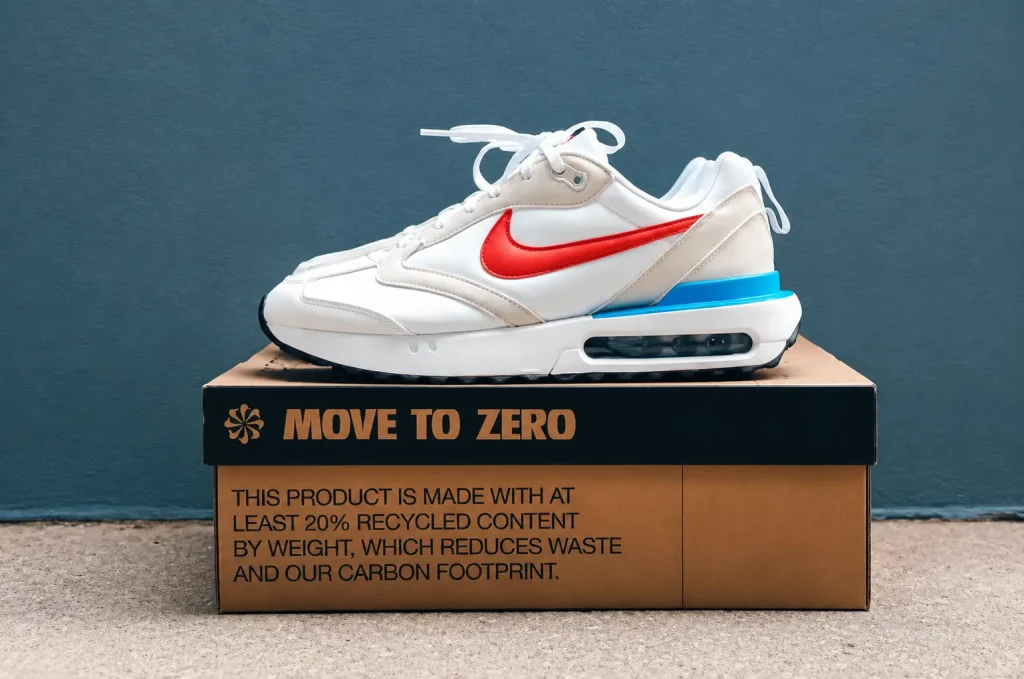
‘Recycled content’ typically refers to the proportion of recovered or reused materials used in a product. It is not only an important indicator of a product’s environmental performance but also a core requirement of many environmental regulations across different countries and regions.
In the packaging industry, aside from using eco-friendly materials, the percentage of recycled content also determines the environmental rating of a given package, as it reduces the reliance on virgin resources at the source.
2. Why Should We Understand Recycled Content?
Recycled content may seem like a minor term to many people, but very few truly understand the commercial value behind it. Today, we will explore the importance of prioritizing recycled content from three key perspectives.
2.1 Growing Contradictions and Regulatory Responses

Consumer demand for diverse packaging materials and innovative designs is increasingly growing, while at the same time, more people are embracing sustainable lifestyles. However, as the environmental impact of packaging waste becomes ever more pronounced, the contradiction between creativity and environmental protection is becoming increasingly acute.
To address this intensifying contradiction, governments around the world have begun to take the environmental issues caused by packaging more seriously and have successively introduced laws and regulations related to packaging materials, production processes, waste recovery, and disposal. Regarding requirements for recycled content, the stringency of policies varies from country to country due to differing national circumstances.
Taking China as an example, the 14th Five-Year Plan for Plastic Pollution Control Action Plan clearly encourages compliant enterprises engaged in the comprehensive utilization of waste plastics to prioritize the supply of packaging-grade recycled materials. It also sets a target of achieving an overall waste plastic recycling rate of over 35% by 2025, with a specific promotion goal of over 30% recycled content for PET beverage bottles. According to the latest 2026 regulations on plastic returnable/transport crates, the minimum recycled content for logistics packaging is set at 30%, while key industries (e-commerce, logistics, and food supporting packaging) are required to achieve a minimum of 50%.
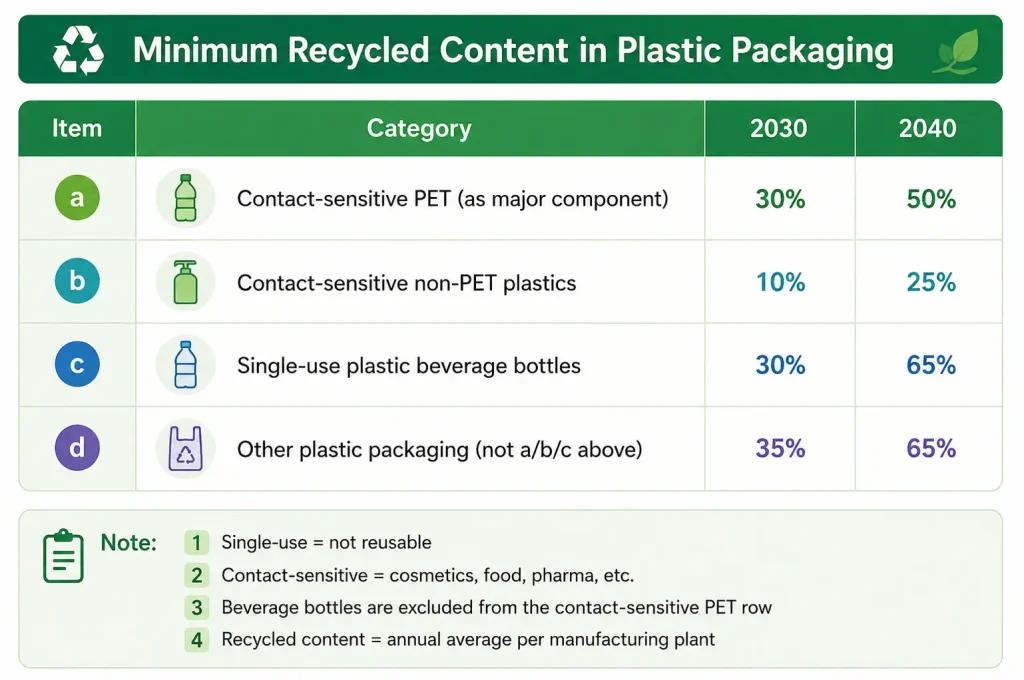
In the European Union, the legally binding Packaging and Packaging Waste Regulation (PPWR) has been introduced to mandate the use of recycled content in packaging. According to this regulation, effective from January 1, 2030, contact-sensitive packaging made primarily from PET must contain 30% recycled material; contact-sensitive packaging made primarily from materials other than PET must contain 10% recycled material; and single-use plastic beverage bottles must also contain 30% recycled material.
These examples show that countries around the world are continuously introducing various policies to promote environmentally friendly packaging, particularly with regard to recycled content, where multiple mandatory requirements have already emerged. If we overlook information related to recycled content, we may not only face market access and compliance risks, but also miss critical opportunities to drive the green transition and enhance the sustainable competitiveness of products. Therefore, strengthening attention to recycled content policies and technologies has become an important issue that both businesses and consumers must address together.
2.2 Market Drivers Behind the Rising Demand for Recycled Content
In fact, the push for higher recycled content is driven not only by environmental pressure but also by rapidly growing market demand. Behind this trend lies the convergence of multiple forces—brands across an increasing number of sectors are continuously strengthening their sustainability commitments in response to consumers’ pursuit of sustainable lifestyles and preference for green products. Among these, the food and beverage sector, along with personal care and cosmetics, stand out as particularly prominent, together accounting for 60% of total PCR packaging demand—making them the two most critical fronts for promoting the application of recycled content in packaging.
The most direct reflection of this trend can be seen in the evolving market demand for post-consumer recycled (PCR) materials. According to the report Global Industry Analysis (2015–2024) and Opportunity Assessment (2025–2035) published by Future Market Insights, the PCR plastic packaging market was valued at approximately USD 53.5 billion in 2025 and is projected to grow to USD 102.3 billion by 2035, representing a compound annual growth rate (CAGR) of 6.7%—demonstrating strong growth resilience. Notably, this growth is not linear or evenly distributed, but instead exhibits three distinct phases of momentum over the next decade. The period between 2025 and 2030 is expected to see the most robust growth, driven primarily by the increasing adoption of PCR materials in bottles, trays, and flexible packaging, alongside the compounding effects of national regulatory policies, global environmental agreements, and brand commitments to reducing virgin plastic usage.
It is evident, therefore, that recycled content in packaging is no longer merely an environmental issue, but a critical reflection of market trends and corporate competitiveness. From regulatory mandates to consumer demand, recycled materials are steadily transitioning from being a “nice-to-have” to a “must-have.” For every participant along the packaging value chain, proactively tracking recycled content developments and strategically positioning for PCR material adoption is not only a natural response to the prevailing trends of our time, but also a pivotal step in seizing the first-mover advantage in the green transition.
2.3 Brand Value Positioning

Increasing the recycled content in product packaging is not only about responding to policies and market demand—it also comes down to a brand’s strategic choice in terms of “value”: how to strike a new balance between consumer price friendliness and high-value product positioning. The procurement and processing of packaging containing recycled materials are typically more expensive than those made from virgin materials, meaning that incorporating recycled content requires brands to bear higher sourcing costs than comparable products on the market. However, if we shift our perspective from viewing this as a “cost item” to a “value item,” we realize that this is, in essence, a value-based dialogue between the brand and its consumers.
When a product’s packaging clearly states that it uses a higher proportion of recycled materials, it not only communicates the company’s environmental commitment but also sends a signal to consumers: this is a responsible brand worthy of their trust. Among similar products, such a brand may no longer hold the lowest price advantage, but it is carving out a different lane—the underserved segment of eco-conscious consumption. Consumers who are willing to pay a premium for sustainability are, in effect, casting their votes through their purchasing behavior. They are not choosing the cheapest product, but the one that best aligns with their personal values. This premium, at its core, is an acknowledgment and reward for the brand’s values.
3. Recycled Content Packaging Solutions
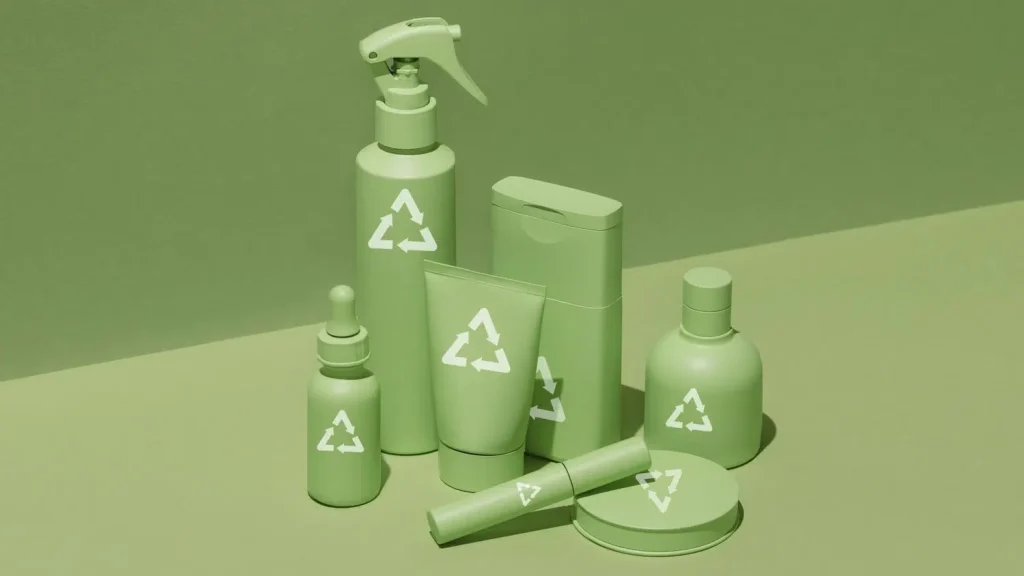
Driven by the combined forces of policy, market demand, and brand value, recycled content is no longer an “optional extra” in the packaging sector—it has become a “must-answer question” that determines whether a company can secure its place in the wave of green transformation.
As a link in the packaging supply chain, we fully understand that increasing recycled content is not a simple matter of material substitution, but rather a systematic challenge that tests quality control, supply chain traceability, and compliance certification capabilities. For this reason, we maintain deep collaboration with legally qualified PCR raw material suppliers, ensuring that every batch of recycled material is traceable and verifiable. To date, we have developed the capability to provide recycled content packaging solutions across multiple material types, including PET, PP, and PE, and can support these with credible recycled content certification reports tailored to the regulatory requirements of different target markets—from raw material sourcing to finished product delivery, with full documentation at every stage.
We believe that a brand’s sustainability commitments must ultimately be reflected in every detail of its products, and packaging is one of the most visible carriers of that message. If you are looking for packaging solutions that combine environmental value with quality assurance—solutions that not only help you meet regulatory requirements but also infuse your brand with genuine green competitiveness—we welcome the opportunity to connect and explore the broader possibilities of recycled materials in packaging.