Book Categories:

1. What is Refillable Packaging?
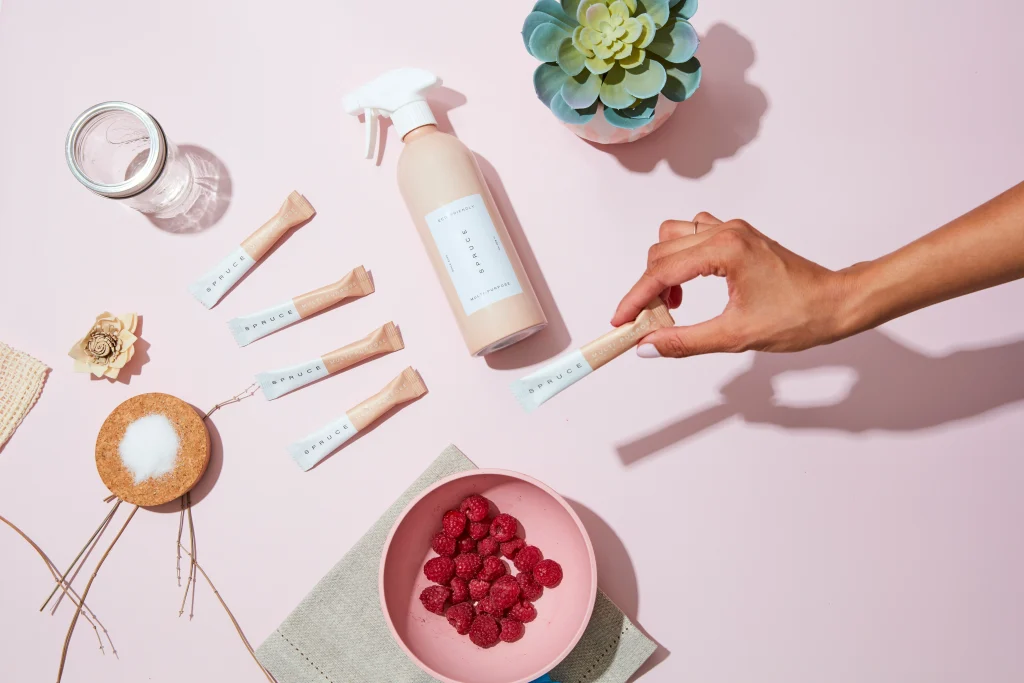
As more and more people embrace eco-friendly lifestyles and green packaging concepts, the idea of “refillable” has frequently appeared in packaging designs across various product categories.
Among the many sustainable packaging design strategies, refillable packaging can be considered a highly feasible direction. Today, through this article, we will take you through a deep dive into the definition of refillable packaging and real-world case studies, providing valuable practical references for your next sustainable project.
To clearly understand the concept of “refillable packaging,” it is helpful to first refer to an authoritative definition. The EU Packaging and Packaging Waste Regulation (PPWR) defines “refill” as follows:
‘refill’ means an operation by which a container that fulfils the packaging function, and that is either owned by the end user or purchased by the end user at the point of sale of the final distributor is filled by the end user or by the final distributor with one or several products purchased by the end user from the final distributor.
In simple terms, this definition means that after consumers have finished using the original product, they can refill the same packaging with the same type of product from the same supplier. This may sound somewhat similar to the well-known concept of “reusable packaging“—both emphasize multiple uses of the packaging. However, there are clear differences between the two in terms of definitional scope and application context.
The PPWR defines “reuse” as follows:
‘re-use’ means any operation by which reusable packaging is used again multiple times for the same purpose for which it was conceived.
This means that, at the regulatory level, “reuse” emphasizes the multiple cycles of use of the same packaging within the same intended scenario. A typical example is plastic trays in a cafeteria—they are designed to hold food repeatedly, and the usage scenario remains unchanged throughout.
By contrast, in the packaging industry and in most consumers’ understanding of green practices, “reusable packaging” has a broader meaning. It is no longer limited to the original use scenario but allows consumers to extend the packaging to secondary or even more diverse applications based on its structure and material characteristics. Take a plastic water bottle as an example: in the short term, it can be used to hold drinking water again (i.e., fulfilling a refill function). However, long-term use may pose a risk of microplastic release. Even so, once such a bottle is no longer used as a drinking container, it can still be repurposed as a watering tool for plants or a small decorative item—achieving a broader sense of “reuse.”
From the above comparison, it is clear that there is a straightforward inclusion relationship between “refillable” and “reusable”: reusable is the broader concept, while refill is one specific way of achieving it. The key difference is that refillable packaging typically refers specifically to “reusing the same type of product” and often consists of a primary container paired with a refill pouch or refill container. The most classic example is a laundry detergent bottle with its corresponding refill pouch.
2. The Application of Refillable Packaging
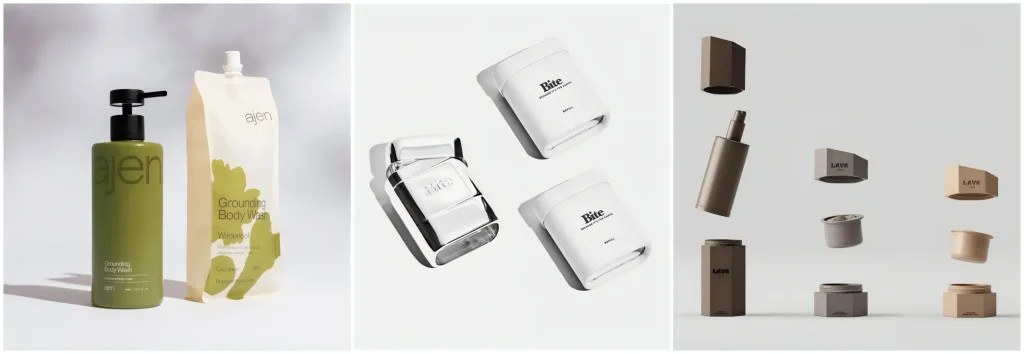
Refillable packaging designs are actually quite common in our daily lives, but they are mostly found in categories such as cleaning products, personal care, and cosmetics—areas with relatively lower requirements for hygiene and shelf life. In contrast, refillable packaging is relatively rare in food, beverages, pharmaceuticals, and other categories that are consumed directly or have stricter safety requirements.
3. Types of Refillable Packaging
To achieve sustainable product packaging, it is not enough to simply understand the definition and applications of refillable packaging. You also need to study real-world examples currently on the market to refine your design approach further and improve the feasibility of your refillable packaging idea.
3.1 Refillable Pouch
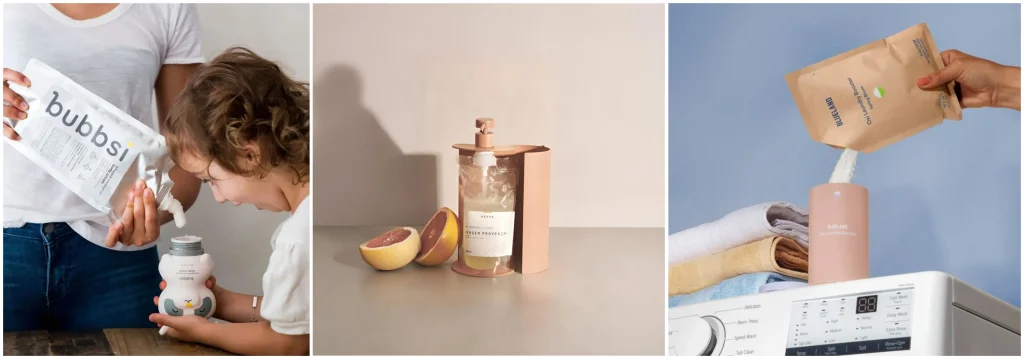
Among the many refillable packaging design cases, the refill pouch is arguably the earliest and most widely used format. Thanks to its relatively mature production technology, its development cost and production cost are lower than those of conventional rigid packaging. As a result, refillable packaging can be considered the most frequently adopted sustainable packaging design strategy today.
Take Japan as an example. The concept of refillable packaging began to gain popularity as early as the 1990s. According to a 2020 survey by Japan’s Ministry of Economy, Trade and Industry (METI), the annual market value of shampoo refill pouches alone reached 300 billion yen (approximately 2.7 billion USD), with around 80% of shampoo products adopting refillable packaging.
3.2 Refillable Containers
In addition to refill pouches, another common form of refillable packaging is the refillable container. Unlike refill pouches, this type of packaging typically retains a relatively sturdy primary container. After the initial purchase, consumers only need to buy refills to replenish the product.
Below, we will introduce a few successful refillable packaging design cases currently on the market, giving you a clearer understanding of how this design strategy is applied in practice.
3.2.1 Refillable Hair Serum Container
Most shampoo refills on the market come in the form of refillable pouches. Compared to traditional plastic bottles, stand-up pouches do reduce plastic usage at the source—far less plastic is required to produce a pouch than to produce a bottle. However, stand-up pouches are significantly more difficult to recycle than conventional containers. On the one hand, the recycling infrastructure for plastic pouches is not as well established as it is for plastic bottles in every region. On the other hand, the recycling process for pouches is more costly, often requiring repeated washing and shredding to completely remove residual product from the pouch material.
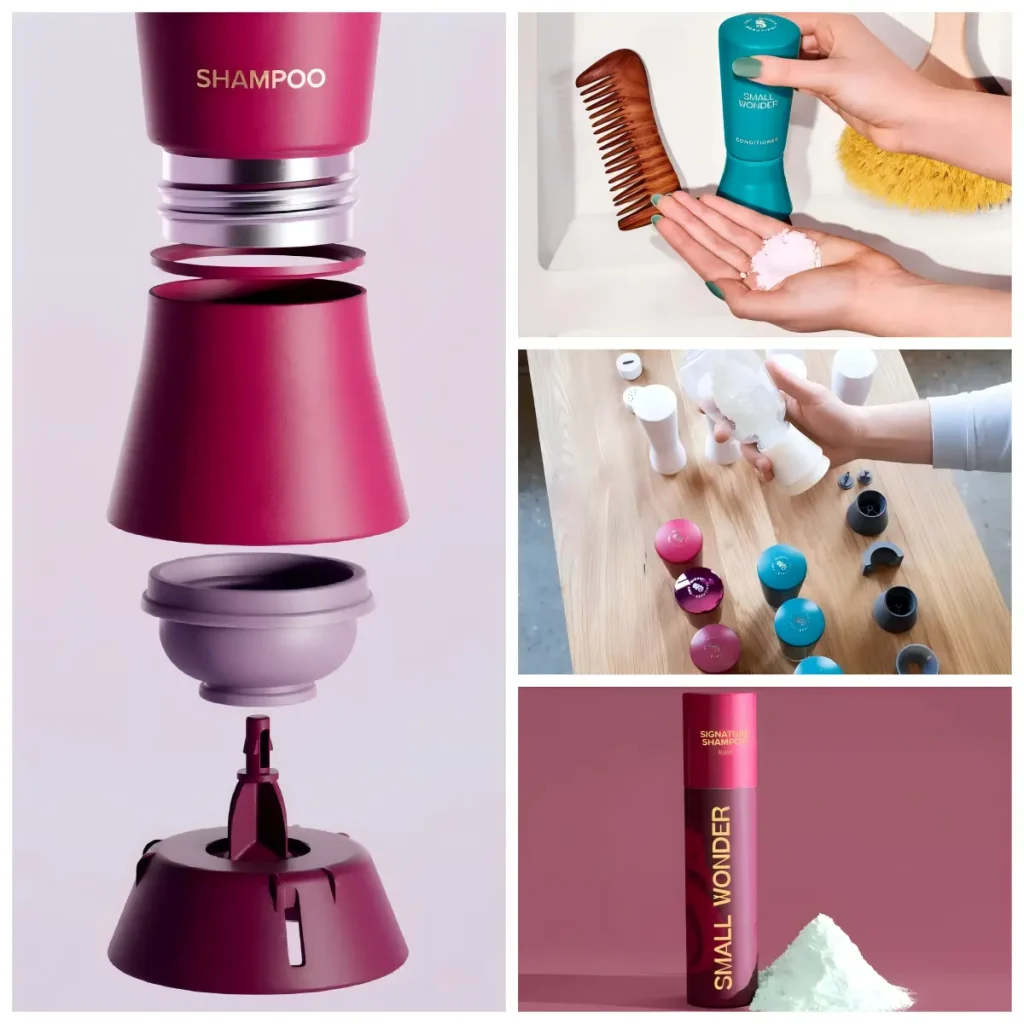
Small Wonder, however, takes a different approach by starting with the product itself and the packaging design, completely transforming the recycling challenge that shampoo refills typically face. While 90% of shampoos on the market are in liquid form, Small Wonder’s shampoo comes in a powder format. Consumers simply need to add a very small amount of water and rub it briefly to activate the powder, creating a rich foam.
The container design of this powdered shampoo can be described as a revolutionary approach to refillable packaging. The bottle holds 70g of shampoo powder, yet its usage performance is equivalent to that of 300ml of liquid shampoo on the market, significantly reducing packaging volume and weight. The dispensing and refilling process is also extremely simple: twist the base to dispense the powder, and twist the bottle body to open it for refilling.
What’s even more noteworthy is that the refill comes in a kraft paper tub, completely eliminating plastic from the material composition. This means that when consumers repurchase the refill, they hardly feel any environmental burden.
3.2.2 Refillable Deodorant
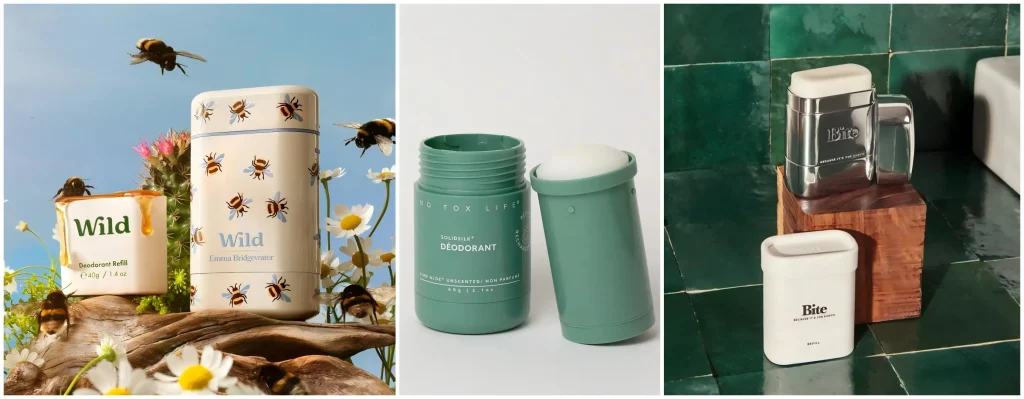
In addition to shampoo, deodorant balm is another product category with strong demand in the personal care market. In the past, deodorant balms were typically packaged in glass or plastic containers. Today, as more people seek sustainable packaging, many brands have started focusing on this category. Among them, Wild and Bite are two deodorant balm brands widely known for their unique sustainable packaging designs. Both use paper packaging to wrap the deodorant balm product, but each has its own noteworthy features in terms of outer case design.
Wild’s outer case is a clever combination of metal and plastic. Its plastic inner mechanism is a precisely engineered trigger responsible for pushing up and retracting the deodorant balm, making it easy for consumers to use. The metal outer case not only enhances the overall aesthetic with a modern feel but also provides excellent protection—metal offers better barrier properties against oxygen and moisture than plastic, effectively preventing the contents from oxidizing and degrading.
In contrast, Bite’s design is more minimalist and environmentally friendly. Apart from the replaceable deodorant balm core, the entire outer case is made of metal, completely eliminating plastic at the source and taking the product’s sustainability to an even higher level.
3.2.3 Refillable Makeup Products
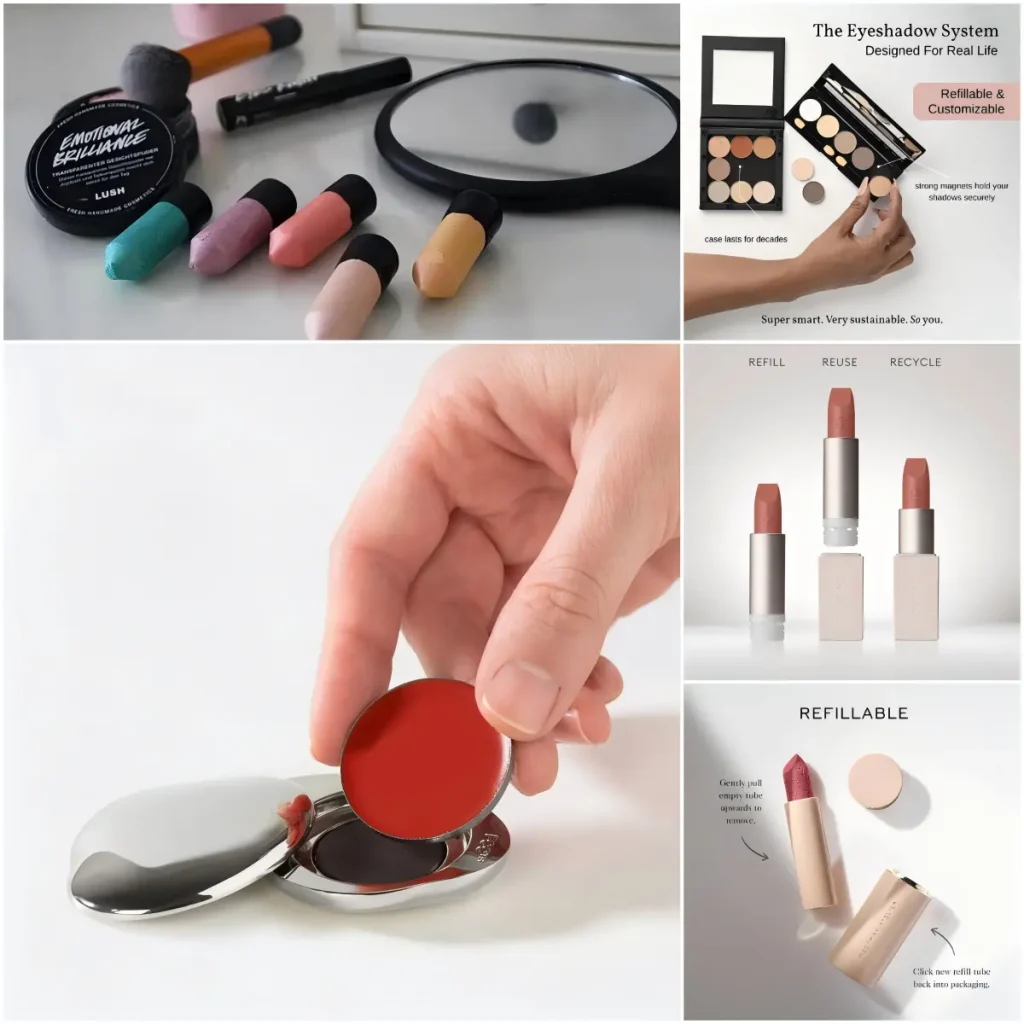
Compared to personal care products, refillable designs are even more widely used in the cosmetics and makeup sector. For common categories such as lipstick, eyeshadow, blush, and mascara, many brands have introduced refillable options.
Westman Atelier, Rose Inc, and Lush all offer refillable lipstick products, but each has its own distinctive features in terms of packaging structure design. Westman Atelier and Rose Inc are relatively similar: both of their refills consist of lipstick tubes made of plastic. The difference lies in the fact that Rose Inc’s refill lipstick tube has a built-in twist mechanism at the base, allowing the lipstick to be used normally, whether or not it is inserted into the original outer packaging. In contrast, Westman Atelier’s refill lipstick tube must be used with its original packaging to activate the twist-up and retraction mechanism. Lush, on the other hand, has taken an even more eco-friendly approach—its refill consists of a lipstick wrapped in a layer of wax, which can be easily peeled off, thereby reducing the amount of plastic used.
In addition, refillable options for blush and eyeshadow are also quite common. By offering different shades of blush and eyeshadow as individual refills, consumers are no longer limited to the brand’s pre-set color combinations when making a purchase. This greatly increases the freedom of shade selection, allowing consumers to achieve both environmental goals and a truly personalized eyeshadow and blush combination that they genuinely like.
3.2.4 Refill Cleaning Products
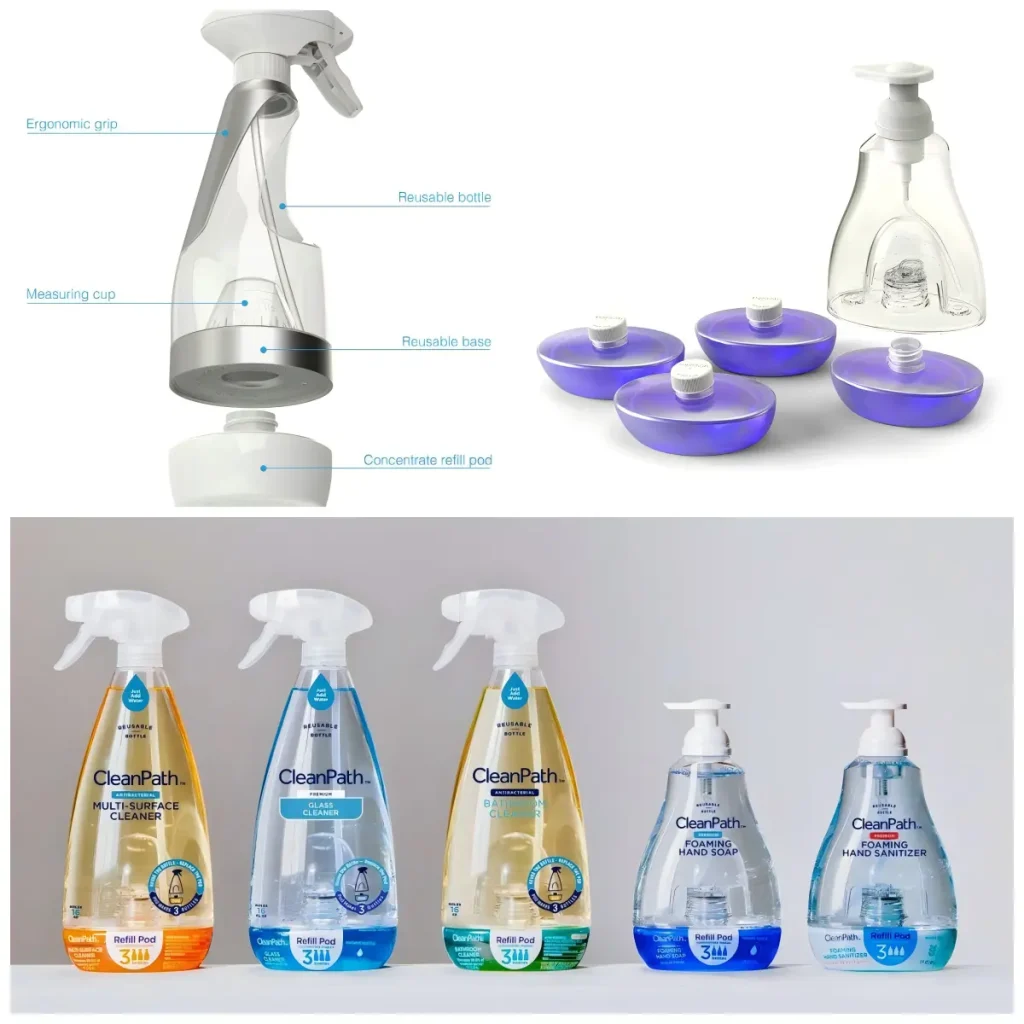
Large-volume fast-moving consumer goods (FMCG) are among the more challenging categories when it comes to sustainable packaging design. To achieve sustainable packaging by reducing packaging size, you need to start at the formulation level, making the product itself more flexible and controllable. In addition to Small Wonder mentioned earlier, CleanPath is another good example in this direction. The difference is that CleanPath has developed its product as a concentrate, paired with an assemble-and-refill container system, enabling sustainable use of large-volume products.
When consumers first purchase CleanPath’s cleaning products, they receive a spray or lotion container equipped with a pump and an integrated measuring cup. The bottom section features a small, lidded container that can be separated from the top—this is called a “refill pod.” The concentrate inside one pod is enough to make the equivalent of 12 bottles or 168 ounces (approximately 5 liters) of cleaning solution. For subsequent purchases, consumers no longer need to buy large bottles of cleaner; they simply buy one small refill pod.
Although the design still uses plastic packaging throughout, there is no denying that it is highly successful in terms of packaging minimization.
3.2.5 Refill Hair & Body Dry Oil
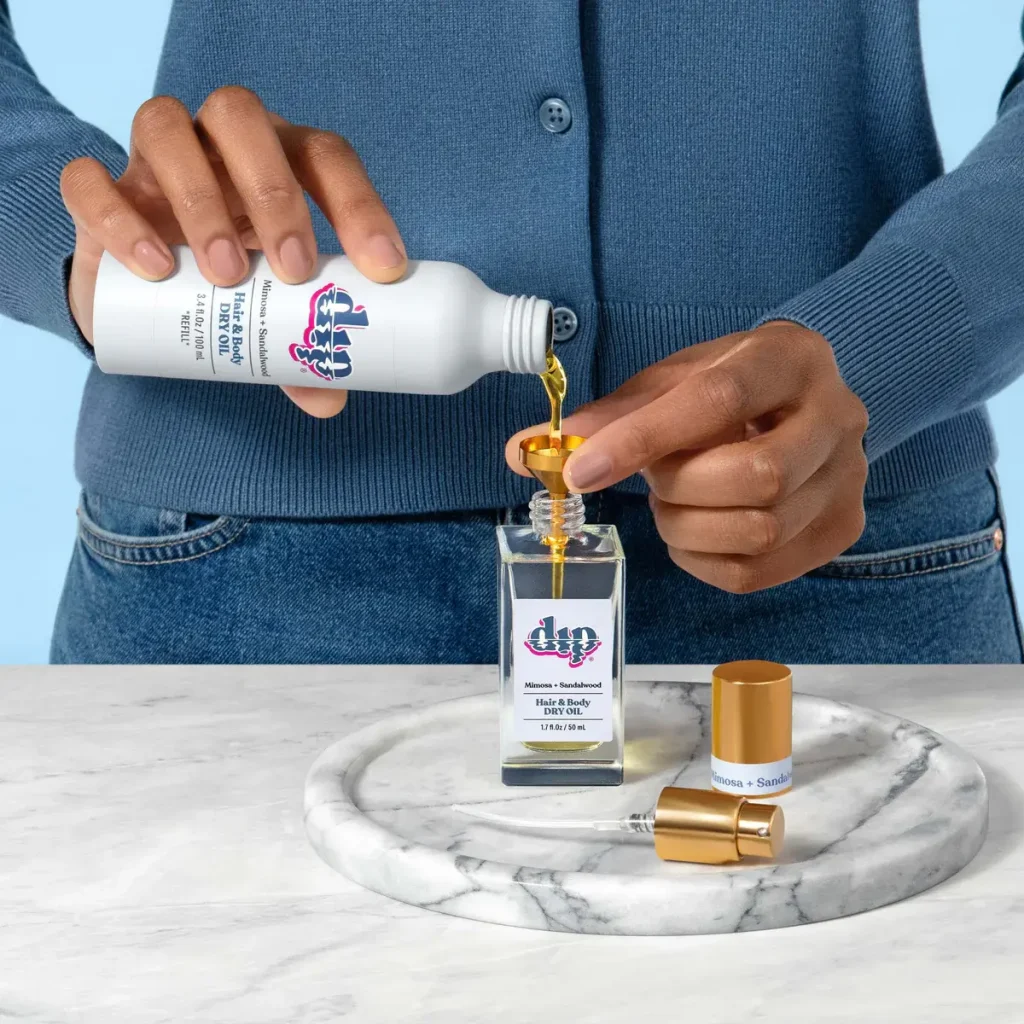
Achieving sustainability through refillable packaging design does not necessarily require heavy investment in structural innovation or high R&D costs. Sometimes, cleverly leveraging the inherent environmental properties of materials can achieve the same goal—Dip is a good example.
Essential oil products typically contain organic compounds with high concentrations and strong volatility, so they are usually stored in glass containers, which offer better chemical stability. Although glass is a highly recyclable packaging material, the carbon footprint generated during its production and transportation has long been a concern for environmentally conscious people. To address this, Dip has chosen a lighter and more eco-friendly aluminum packaging for its essential oil refills.
Aluminum is not only lighter in weight and lower in transportation carbon emissions but also offers good recyclability, much like glass. By combining a permanent-use glass outer bottle with lightweight aluminum refills, Dip has created a refillable packaging system that is both premium and environmentally friendly. Consumers receive the glass bottle with their first purchase, and for subsequent purchases, they only need to buy the lightweight aluminum refill. This approach reduces both material consumption and the environmental burden of transportation.
4. Advantages of Refillable Packaging

Based on the above definition and case analysis of refillable packaging, we can clearly summarize its core advantages within sustainable packaging:
4.1 Reducing Packaging Waste at The Source
A refillable packaging system typically includes a refill that is much more streamlined than the original packaging. By retaining the reusable outer package and replacing only the inner core or refill, refillable packaging can significantly reduce the consumption of single-use packaging. Therefore, in a strict sense, refillable packaging helps reduce raw material consumption from an environmental perspective and ultimately lowers the generation of packaging waste at the source.
4.2 Reducing Long-term Procurement Costs
For consumers, refills are typically priced lower than the original product (due to the savings on packaging costs), allowing for cost savings over the long term. For brands, although refillable packaging may require some initial R&D investment, once a standardized system is established, subsequent production and shipping costs are often lower—refills are smaller in size and lighter in weight, resulting in reduced warehousing and logistics costs.
4.3 Reducing the Carbon Footprint of The Supply Chain
As an important approach to achieving sustainable packaging, refillable packaging not only reduces the use of packaging materials but also significantly decreases product volume and weight, thereby improving loading efficiency per unit of transport space. This change further lowers the carbon footprint across the entire supply chain.
4.4 Balancing Convenience and Personalization
Compared to original product packaging, refillable packaging is lighter and simpler to purchase, while also giving consumers more control over their choices within the same product line. For product families with multiple SKUs, consumers can not only repurchase the same product but also flexibly choose different products within the same series to mix and match. This combination of “multi-product line + high degree of choice” allows consumers to practice environmental responsibility while truly achieving a personalized consumption experience of “buy on demand and mix as you like.”
4.5 Strengthening Brand Environmental Image and User Loyalty
Brands that adopt refillable packaging are often able to communicate a clear and tangible commitment to environmental responsibility, earning recognition from sustainability-minded consumers. At the same time, the refillable model naturally encourages repeat purchases.
On one hand, once consumers have purchased the primary container of a refillable packaging system, they will naturally tend to buy refills from the same brand, which subtly increases brand loyalty. On the other hand, refillable packaging often features a distinctive structural design, and the same original container typically fits only its brand’s proprietary refill. This inherent design exclusivity further reinforces the bond between the brand and the user.
5. Challenges Facing Refillable Packaging

Refillable packaging is often seen as one of the “ultimate solutions” for sustainable packaging, theoretically capable of significantly reducing packaging waste through container reuse. However, in practice, this model faces multiple systemic challenges across different dimensions. These challenges can be understood from the following four perspectives:
5.1 Economic and Cost-related Challenges
Refillable containers are typically more complex in design, and their upfront R&D and production costs are often higher than those of conventional hollow containers. This inevitably results in a higher market price compared to similar products without refillable designs. Brands need to bear considerable initial investment pressure, while consumers are correspondingly required to pay a premium for the environmental benefits of refillable packaging. For low- to middle-income groups who are price-sensitive, this is a particularly prominent challenge.
5.2 Concerns Over Cleaning and Hygiene
Some refillable packaging systems face issues related to cleaning and sanitizing the original container. If the same original container is compatible with multiple different formulations from the same brand, the cleaning process becomes even more complicated.
Furthermore, during repeated cleaning and sanitizing, the original container may show signs of material aging or performance degradation. Therefore, even with refillable packaging, it must be anticipated that it may eventually still need to be discarded. Brands should also fully consider the recyclability of the original container at the design stage, in order to complete their refillable packaging system.
5.3 Greenwashing risk and consumer trust crisis
Refillable containers on the market are often complex in design, while there are also structurally simpler refillable designs. However, overly simple designs often struggle to convince consumers of their genuine environmental value, easily leading to accusations of greenwashing. This is commonly seen in the combination of a “premium outer bottle + a lightweight plastic inner refill.” Although the plastic inner refill uses less plastic than the outer bottle, consumers may feel that having to spend more money on a nice-looking outer shell for the sake of environmental protection is less appealing than simply choosing a similar product made from a single eco-friendly material. In such cases, the intended environmental benefits of the refillable product are significantly diminished, and the sustainable product is easily seen as a marketing gimmick.
6. Refillable Packaging Solutions

Through the above case studies and an understanding of the current state of the sustainable packaging market, we hope readers now have a more comprehensive view of the many details that need attention in the design and development of refillable packaging. Sustainable packaging is by no means just about “making it refillable.” It requires brands to think through the following at an early stage: what materials to choose, what structure to design, what size the packaging should be, and how the surface finishing should be executed—all of which can influence consumer purchasing decisions and perceptions. It is fair to say that sustainable packaging is often far more complex and challenging than simply marketing a formulated product.
While refillable packaging designs currently on the market have their merits—featuring both shortcomings and strengths—we must take a moment to express our respect to all brands that are willing to pursue this direction. The exploration and development along this path are no easy feat in themselves.
As a supplier with over a decade of manufacturing experience in the packaging industry, we fully understand the time and effort brands need to invest in sustainable packaging. Today, we are sharing this article not only to express our views on sustainable packaging but also to provide inspiration and practical references for brands looking to create sustainable products, helping to ease the exploration pressure during product development. At the same time, we hope to draw on our own experience to offer you more practical advice on packaging design. If you have any questions about refillable packaging, please feel free to reach out to us for a discussion.